
Best Digital Food Scale for Tracking Calories and Macros
Published by AWS Team on 10th Sep 2026
The best digital food scale for tracking calories and macros provides a consistent way to measure food portions and compare them with nutrition information. Instead of estimating whether a bowl contains one serving or two, you can weigh the food in grams and calculate its approximate calories, protein, carbohydrates and fat.
A food scale does not directly analyze what is on the plate. It measures mass. Nutritional values must come from a product label, recipe calculation or reliable food-composition database. When the correct information is paired with an accurate portion weight, however, a digital kitchen scale can make nutrition tracking much more organized.
This is especially helpful with foods that are difficult to estimate visually. A spoonful of peanut butter may contain significantly more than the labeled serving. Two chicken breasts that appear similar can have different weights. Cereal, pasta, rice, cooking oils, cheese and snacks can also be difficult to portion consistently without measurement.
For most users, the best food scale for tracking macros has a capacity of at least 5,000 grams or 11 pounds, whole-gram readability, an easy tare function, a stable platform and a display that remains visible beneath plates and meal-prep containers.
This guide explains how to select a calorie-counting scale, calculate nutrition from food weight, avoid common tracking errors and compare American Weigh Scales models for meal prep and everyday kitchen use.
What Are Calories and Macros?
Calories represent energy, while macronutrients are nutrients that the body uses in relatively large amounts.
The three commonly tracked macronutrients are:
-
Protein
-
Carbohydrates
-
Fat
Alcohol can also contribute calories, but it is not normally treated as one of the three primary macros in meal-tracking plans.
The USDA Food and Nutrition Information Center explains that protein and carbohydrates provide approximately four calories per gram, while fat provides approximately nine calories per gram. Its macronutrient and food information resources offer additional educational context.
These values help explain how food energy is calculated, but multiplying the macro numbers shown on a label may not always reproduce the printed calorie total exactly. Rounding rules, fiber, sugar alcohols and other factors can create differences.
How Does a Food Scale Help Track Calories?
A digital scale provides the weight of the portion actually prepared or eaten. You can then compare that amount with nutrition information listed per serving or per 100 grams.
Example Using Nutrition Per 100 Grams
Suppose a food contains:
-
200 calories per 100 grams
-
10 grams of protein
-
20 grams of carbohydrates
-
8 grams of fat
If your portion weighs 150 grams, multiply each value by 1.5:
-
Calories: 300
-
Protein: 15 grams
-
Carbohydrates: 30 grams
-
Fat: 12 grams
Example Using a Labeled Serving
Suppose a package lists:
-
Serving size: 40 grams
-
Calories: 160
-
Protein: 5 grams
-
Carbohydrates: 20 grams
-
Fat: 7 grams
If your measured portion weighs 60 grams:
60 ÷ 40 = 1.5 servings.
Multiply each listed value by 1.5:
-
Calories: 240
-
Protein: 7.5 grams
-
Carbohydrates: 30 grams
-
Fat: 10.5 grams
The FDA’s explanation of serving sizes notes that the nutrition information on most labels refers to the listed serving. A measured portion may be smaller or larger.
What Is the Best Digital Food Scale for Macro Tracking?
For most people, the best digital food scale for tracking calories and macros should offer:
-
A capacity of at least 5 kilograms
-
Readability of 1 gram
-
A tare function
-
Grams and ounces
-
A platform large enough for a dinner plate
-
A visible, backlit display
-
Simple controls
-
Stable construction
-
Easy-to-clean surfaces
-
Reliable battery life
You can compare several capacities and designs in the American Weigh Scales collection of digital kitchen and food scales.
Important Features to Compare
Maximum Capacity
The scale’s capacity includes everything placed on the platform. That means the plate, bowl or meal-prep container counts toward the total.
Five kilograms or 11 pounds is enough for most individual plates and food containers. A 10-kilogram scale is more appropriate when weighing large recipes, heavy glass bowls or multiple portions together.
Readability
Readability refers to the smallest increment shown by the scale.
Whole-gram readability is sufficient for most nutrition tracking because ordinary food portions are much larger than one gram. A 0.1-gram scale can be helpful for lightweight foods, spices and recipe ingredients, but it is not necessary for an entire meal.
Tare Function
Tare resets the displayed measurement to zero after a container has been placed on the scale.
This allows you to weigh only the food. You can also tare between ingredients to record each component separately.
Platform Size
A large platform makes it easier to use dinner plates, meal-prep containers and mixing bowls. The container should remain stable and must not touch the countertop around the scale.
Display Visibility
A wide plate may cover the scale’s display. Choose a model with a screen that remains visible when your usual containers are placed on the platform.
Measurement Units
Grams are particularly convenient for nutrition tracking because food labels and databases often provide metric weights. Ounces may be useful for meat, recipes and familiar serving descriptions.
Ease of Cleaning
Crumbs, oils and sauces can collect around the platform. Use a plate or bowl whenever possible and wipe the scale according to its care instructions.
Do not immerse an electronic kitchen scale unless the model is specifically designed for it.
Best Overall Macro-Tracking Scale: PrepLite-10KG
The PrepLite-10KG Kitchen Scale offers a generous 10-kilogram capacity with 1-gram readability.
This combination makes it suitable for individual food portions, complete meals, large mixing bowls and batch recipes.
Why It Works for Calorie Tracking
A high capacity allows you to use substantial plates and glass meal-prep containers without approaching the limit. Whole-gram readability provides enough detail for most foods, including:
-
Chicken
-
Beef
-
Fish
-
Rice
-
Pasta
-
Vegetables
-
Fruit
-
Cheese
-
Nuts
-
Snacks
-
Complete meals
Best for Batch Recipes
When preparing chili, soup, casserole or another mixed recipe, the scale can help determine the total finished weight. You can then divide the recipe into equal portions.
Who Should Choose It?
Choose the PrepLite-10KG if you want one scale for both individual portions and large weekly meal-prep batches.
Best Everyday Food Scale: VANILLA-5K
The VANILLA-5K Digital Kitchen Scale allows users to weigh directly on its platform or use a separate bowl with the tare feature.
A five-kilogram capacity is practical for everyday nutrition tracking and general cooking.
Best Uses
The VANILLA-5K can measure:
-
Breakfast bowls
-
Sandwich ingredients
-
Protein portions
-
Cooked grains
-
Pasta
-
Salads
-
Fruit
-
Snacks
-
Desserts
-
Meal-prep containers
Who Should Choose It?
Choose the VANILLA-5K if you need a straightforward household scale for daily food logging and meal preparation.
Best Compact Macro Scale: ONYX-5K
The ONYX-5K Digital Kitchen Weight Scale offers a compact footprint and tare functionality for plates and bowls.
A compact scale is easier to keep accessible, which matters when it is used several times each day.
Convenience Encourages Consistency
A scale stored in a difficult-to-reach cabinet may eventually stop being used. A compact model can remain on the counter without occupying excessive space.
Who Should Choose It?
Choose the ONYX-5K if you want a small multipurpose scale for daily calorie and macro tracking.
Best Bowl Scale for Meal Preparation: 5KBOWL
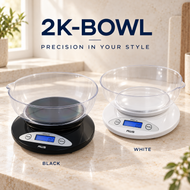
The 5KBOWL Digital Bowl Scale combines a five-kilogram capacity with 1-gram readability and a removable two-liter bowl.
The bowl helps contain foods that are awkward to weigh on a flat platform.
Best Uses
The 5KBOWL is useful for:
-
Cooked rice
-
Pasta
-
Chopped vegetables
-
Fruit
-
Cereal
-
Granola
-
Ground meat
-
Shredded chicken
-
Mixed salads
-
Bulk snacks
Who Should Choose It?
Choose the 5KBOWL if you frequently prepare loose ingredients before dividing them among meal containers.
Best High-Precision Kitchen Scale: KF-5KG
The KF-5KG Digital Kitchen Scale offers an unusual combination of five-kilogram capacity and 0.1-gram readability.
This model can handle complete food portions while also measuring lighter ingredients with greater resolution.
When 0.1-Gram Readability Helps
Tenths-of-a-gram measurement can be useful for:
-
Lightweight spices
-
Coffee
-
Tea
-
Yeast
-
Small amounts of oil
-
Recipe development
-
Tiny garnishes
Is That Precision Necessary for Macros?
Most meal components do not require 0.1-gram resolution. However, users who also bake, brew coffee or test recipes may appreciate the added versatility.
Who Should Choose It?
Choose the KF-5KG if you want one scale that combines practical kitchen capacity with finer readability.
Best Slim Design: CAMEO-5K
The CAMEO-5K Digital Kitchen Scale features a slim, lightweight body and tempered-glass surface.
Its tare function allows the user to weigh food inside a plate, bowl or container.
Why Storage Matters
People tracking several meals each day benefit from keeping their scale within easy reach. A thin model can fit inside a drawer or narrow cabinet when counter space is limited.
Who Should Choose It?
Choose the CAMEO-5K if you want a compact scale with an attractive surface for everyday portion measurement.
How to Weigh Food for Calories and Macros
Step 1: Find Reliable Nutrition Information
Use the product’s Nutrition Facts label or a reputable database such as USDA FoodData Central.
Select the closest matching food entry. Pay attention to brand, preparation method, fat content and whether the food is raw or cooked.
Step 2: Place the Scale on a Level Surface
Use a firm countertop. Avoid towels, unstable cutting boards and surfaces affected by vibration.
Step 3: Select Grams
Grams are often the easiest unit for nutrition calculations. They eliminate fractions and match many food labels.
Step 4: Add the Empty Container
Place the plate, bowl or meal-prep container in the center of the platform.
Step 5: Press Tare
Wait for the display to return to zero.
Step 6: Add the Food
Add food gradually until the desired weight appears.
Step 7: Record the Amount
Enter the measured amount into your log or calculate it using the serving information.
Step 8: Tare Between Ingredients
If tracking several foods on one plate, press tare before adding each new ingredient.
For example:
-
Add chicken and record 150 grams.
-
Press tare.
-
Add rice and record 180 grams.
-
Press tare.
-
Add vegetables and record 120 grams.
-
Press tare.
-
Add sauce and record 25 grams.
How to Calculate Calories From Grams
When the Label Uses Grams
Suppose a cereal label lists 150 calories per 40 grams.
Your portion weighs 55 grams.
Use this calculation:
55 ÷ 40 × 150 = approximately 206 calories.
Calculating Macros
If the same 40-gram serving contains:
-
4 grams protein
-
30 grams carbohydrates
-
2 grams fat
Multiply each number by 55 ÷ 40, or 1.375:
-
Protein: 5.5 grams
-
Carbohydrates: 41.25 grams
-
Fat: 2.75 grams
Do Not Calculate by Weight Alone
One hundred grams of chicken and 100 grams of avocado have different nutritional profiles. Weight becomes useful only when matched with information for the correct food.
Raw Food vs Cooked Food
One of the most common tracking mistakes is weighing a food in one state and using nutrition information for another.
Meat Loses Water During Cooking
Chicken, beef, turkey and fish normally weigh less after cooking because moisture and sometimes fat are lost.
One hundred grams of cooked chicken is not nutritionally equivalent to 100 grams of the same chicken before cooking.
Rice and Pasta Gain Water
Dry grains and pasta become heavier after absorbing water. One hundred grams of dry rice is very different from 100 grams of cooked rice.
Vegetables Can Gain or Lose Weight
Boiling may add water, while roasting can remove it. Oils and sauces can also change the final weight and calorie content.
Be Consistent
If you weigh raw food, use a raw entry. If you weigh cooked food, use a cooked entry matching the preparation method as closely as possible.
How to Track a Homemade Recipe
Mixed recipes require an extra step because several ingredients contribute to the final nutrition.
Step 1: Record Every Ingredient
Weigh each ingredient before adding it to the recipe. Include oils, sauces, toppings and other calorie-containing components.
Step 2: Calculate the Total Nutrition
Add the calories and macros from every ingredient.
Step 3: Weigh the Finished Recipe
Place the finished food in a suitable container and determine its net weight after subtracting the container.
Step 4: Determine Nutrition Per Gram
If the complete recipe contains 2,400 calories and weighs 1,600 grams:
2,400 ÷ 1,600 = 1.5 calories per gram.
Step 5: Weigh Your Portion
A 350-gram portion would contain approximately:
350 × 1.5 = 525 calories.
The same calculation can be applied separately to protein, carbohydrates and fat.
Account for Cooking Changes
Cooking changes water weight but does not remove all nutrients proportionally. Weighing the final recipe lets you distribute the calculated total across the finished mass.
How to Track Cooking Oil
Oil is energy-dense, and visual estimates can be inaccurate.
Direct Method
Place the oil container on the scale and record its weight. Pour the desired amount, then return the bottle to the scale. The difference represents the amount used.
Bowl Method
Place a bowl or pan on the scale, press tare and add the oil directly.
Consider What Remains Behind
Some oil may remain in the pan or container. Nutrition tracking is inherently approximate, so use a consistent method rather than expecting perfect laboratory-level certainty.
How to Track Sauces and Condiments
Sauces can contain oil, sugar or other ingredients that contribute significant calories.
Place the plate or meal-prep container on the scale, press tare and add the sauce. Compare the measured weight with the label.
Do not assume one tablespoon has the same weight for every sauce. Density varies among ketchup, mayonnaise, salad dressing, nut butter and other products.
How to Measure Nut Butter
Nut butter is sticky and difficult to measure cleanly with spoons.
Try this method:
-
Place the jar on the scale.
-
Record or tare its weight.
-
Remove the desired amount.
-
Return the jar to the scale.
-
Use the difference as the amount consumed.
This subtraction method reduces the need to scrape nut butter into a separate measuring utensil.
How to Measure Packaged Snacks
Nutrition labels may list a serving in pieces and grams. The number of pieces is an approximation because individual chips, crackers and candies can differ in size.
Using the gram weight provides a more direct comparison with the nutrition label.
The FDA explains that all calories and nutrients shown on the label refer to its listed serving size.
Understanding Serving Size vs Portion Size
A serving size is the reference amount listed on a nutrition label. A portion is the amount a person chooses to eat.
The two amounts may differ. The FDA notes that labeled serving sizes generally reflect what people typically consume rather than prescribing how much a specific person should eat.
A kitchen scale measures the selected portion so its nutrition can be estimated relative to the label.
Can a Food Scale Help With Weight Management?
A digital food scale can improve awareness and consistency, but it does not guarantee weight loss or determine the correct calorie target.
Body weight is influenced by many factors, including energy intake, activity, medical conditions, medication, sleep, stress and individual physiology.
The USDA MyPlate resources provide general tools for building meals from multiple food groups. People with medical conditions, a history of disordered eating or highly specific goals should work with an appropriate healthcare professional.
Avoid Turning Precision Into Perfectionism
A kitchen scale is a practical tool, not a test of whether someone is eating “perfectly.”
Food composition naturally varies. Two apples of equal weight may not have identical sugar or water content. Restaurant meals cannot always be measured. Nutrition labels and database values are estimates based on samples and established calculations.
The goal is useful consistency, not impossible certainty.
If weighing food creates anxiety, obsessive behavior or fear around meals, stop and seek guidance from a qualified healthcare or mental-health professional.
Choosing Reliable Nutrition Data
Packaged Foods
Use the label on the exact product whenever possible. Different brands can have different recipes and nutrition.
Whole Foods
Use a trusted database and choose an entry matching the food’s preparation.
Restaurant Foods
Use the restaurant’s published nutrition information when available. Remember that actual portions may vary.
Homemade Foods
Calculate the complete recipe from its ingredients, then divide according to servings or finished weight.
The government-supported Nutrition.gov provides access to credible nutrition resources for consumers.
Common Macro-Tracking Mistakes
Forgetting to Tare the Plate
If the scale includes the plate weight, the food amount will be incorrect.
Using Raw Data for Cooked Food
Match the measured state to the database entry.
Excluding Oil and Sauces
Small amounts of energy-dense ingredients can materially affect the calculation.
Entering the Wrong Brand
Different brands may contain different amounts of protein, carbohydrates and fat.
Confusing Serving Size With a Recommendation
The label’s serving size is used for presenting nutrition information. It is not a personalized meal plan.
Choosing an Unverified Database Entry
Crowdsourced nutrition entries may contain mistakes. Use product labels and established databases when possible.
Weighing Bones, Peels or Packaging
Measure the edible portion if that is what the nutrition information represents.
Using Too Many Decimal Places
Whole-gram measurement is sufficient for most food portions. Extra decimal places rarely improve practical calorie estimates.
Ignoring Recipe Yield
For homemade food, calculate the finished recipe’s total weight rather than assuming every ladle or slice is identical.
How to Check Scale Consistency
-
Place the scale on a firm, level surface.
-
Turn it on and allow it to reach zero.
-
Place an appropriate reference item in the center.
-
Record the reading.
-
Remove the item.
-
Wait for zero.
-
Repeat several times.
The readings should remain reasonably consistent within the scale’s specifications.
If they change, check the batteries, surface, temperature and position of the item. Calibrate only according to the manufacturer’s manual with the specified weight.
Frequently Asked Questions
What Is the Best Food Scale for Counting Calories?
For most people, the best option has a five-kilogram capacity, 1-gram readability, a tare function and a platform large enough for plates and containers.
Can a Food Scale Tell Me How Many Calories Are in Food?
A standard scale cannot analyze calories. It provides weight, which must be compared with a label, database or recipe calculation.
Is One-Gram Readability Enough?
Yes. Whole-gram readability is sufficient for most foods and complete meals.
Should I Measure Food in Grams or Ounces?
Both units work, but grams usually make nutrition calculations easier.
Do I Weigh Food Before or After Cooking?
Either is acceptable if you use nutrition data for the same state. Do not mix raw measurements with cooked entries.
How Do I Weigh Several Foods on One Plate?
Place the plate on the scale, press tare and add the first food. Record it, tare again and add the next item.
Does Tare Remove the Plate From Maximum Capacity?
No. Tare resets the displayed weight, but the scale still supports the plate physically.
How Do I Calculate Calories for a Homemade Recipe?
Add the nutrition of all ingredients, weigh the finished recipe and divide the totals by its final weight or number of servings.
Can a Scale Measure Protein?
It measures the food’s total mass. Protein must be determined using nutritional information for that food.
Why Does Cooked Meat Weigh Less?
Meat loses water and sometimes fat during cooking. The exact change depends on the type and preparation method.
Why Does Cooked Rice Weigh More?
Rice absorbs water during cooking, increasing its mass.
Is a Nutrition Scale a Medical Device?
No. A consumer food scale is not a substitute for medical care, individualized nutrition counseling or a professionally prescribed diet.
Can I Track Restaurant Meals With a Scale?
You may measure the portion, but ingredient and recipe information is still needed. Use restaurant nutrition data when available.
How Accurate Are Macro Calculations?
They are estimates influenced by scale performance, label rounding, natural food variation, preparation and database selection.
Final Verdict
The best digital food scale for tracking calories and macros should make portion measurement straightforward.
For most users, a scale with at least a five-kilogram capacity, whole-gram readability, a reliable tare function and a visible display provides everything needed for daily tracking.
A 10-kilogram model offers more flexibility for large recipes and heavy containers. A 0.1-gram scale can be useful for small ingredients, but that level of detail is unnecessary for most meals.
Use grams whenever practical, match raw food with raw nutrition data and cooked food with cooked data, and include oils, sauces and other recipe ingredients in calculations.
Most importantly, remember what the scale can and cannot do. It can measure food consistently. It cannot determine the ideal diet, diagnose a condition or guarantee that every nutrition estimate is exact.
Used sensibly, a digital food scale can reduce guesswork, improve meal-prep consistency and make calorie and macro tracking far more organized.