
Best Food Scale for Measuring Meat Portions Accurately
Published by AWS Team on 10th Sep 2026
The best food scale for measuring meat portions makes meal prep faster, more consistent and easier to organize. Whether you are dividing chicken breasts for weekly lunches, portioning ground beef for burgers, preparing steaks for several guests or recording food intake, a reliable digital kitchen scale gives you a clear measurement instead of forcing you to estimate by appearance.
Visual estimates can be surprisingly inconsistent. Two chicken breasts may look almost identical while having noticeably different weights. A thick cut of steak can weigh more than a much larger but thinner piece. Ground meat is even harder to divide evenly without a scale because its shape changes as it is handled.
A digital meat portion scale solves these problems by displaying the actual weight in grams, ounces, pounds or another supported unit. You can place an empty plate or container on the scale, press tare and add meat until the desired weight appears.
However, selecting the best food scale for meat portions requires more than choosing the first model with a digital display. Capacity, readability, platform size, tare functionality, cleanability and display visibility all affect how practical the scale will be in a real kitchen.
This guide explains what to look for in a meat portion scale, whether meat should be weighed raw or cooked, how to divide bulk packages accurately and which American Weigh Scales models work well for different meal-preparation needs.
Why Use a Food Scale to Measure Meat Portions?
A food scale provides objective information. Instead of deciding whether a piece of meat “looks like” four, six or eight ounces, you can place it on the scale and read the result.
That simple measurement can improve meal preparation in several ways.
More Consistent Portions
Consistent portions are useful when preparing several meals from one bulk package. If one container receives considerably more meat than another, the meals may provide different amounts of food and the bulk package may not stretch as far as planned.
A scale allows you to divide the total amount more evenly. This can be useful for:
-
Weekly meal prep
-
Family dinners
-
Catering preparation
-
Hamburger patties
-
Meatballs
-
Chicken portions
-
Steak servings
-
Seafood portions
-
Freezer packages
-
Recipe ingredients
Better Recipe Accuracy
Many recipes specify meat by weight. Chili may call for one pound of ground beef, meatballs may require 500 grams of meat and a stir-fry may use eight ounces of sliced chicken.
Package labels are helpful, but the actual amount remaining after trimming or dividing may differ from the original package weight. A scale lets you measure the portion being used in the recipe.
Easier Bulk Buying
Buying meat in larger packages can be economical, but only if the food is divided and stored effectively. A kitchen scale can help turn one large package into several labeled freezer portions.
For example, a five-pound package of ground meat can be separated into five one-pound portions or ten half-pound portions. Each package can then be frozen and thawed according to future recipe needs.
More Organized Meal Prep
When portions are measured and labeled, it becomes easier to know how many meals are available. You can plan recipes, grocery purchases and freezer inventory with less guesswork.
Accurate Nutrition Calculations
A food scale measures the mass of a portion, but it does not independently determine calories, protein or fat. Nutritional values must come from a reliable database or the product’s label.
The USDA FoodData Central database provides nutritional information for many foods. When using it, select an entry that matches the type of meat, fat percentage and preparation state as closely as possible.
What Is the Best Food Scale for Meat Portions?
For most home kitchens, the best food scale for measuring meat portions has a capacity of at least 5,000 grams or 11 pounds, readability of 1 gram or approximately 0.1 ounce, a tare function and a platform large enough to support common plates and containers.
A five-kilogram capacity is generally sufficient for individual servings, family-size recipes and most bulk-meat preparation. People dividing very large packages or using heavy bowls may benefit from a 10-kilogram capacity.
A scale with 0.1-gram readability is usually unnecessary for individual meat portions. Whole-gram readability provides adequate detail for chicken, beef, pork, turkey and seafood. Higher resolution may be helpful if the scale will also be used for spices, supplements, coffee or very small recipe ingredients.
You can compare different capacities, platform styles and display options in the American Weigh Scales selection of digital kitchen scales.
Important Features in a Meat Portion Scale
Maximum Capacity
Capacity refers to the greatest total weight the scale is designed to support. It includes the meat, plate, bowl, meal-prep container and anything else resting on the platform.
Pressing tare resets the displayed value, but it does not remove the container’s physical weight from the scale. If a glass bowl weighs 1,000 grams and the scale has a 5,000-gram maximum, approximately 4,000 grams of capacity remain.
A five-kilogram scale is practical for everyday food preparation. A 10-kilogram model offers more flexibility for bulk packages, large bowls and batch cooking.
Readability
Readability is the smallest change shown on the display.
For meat portions, common options include:
-
One gram
-
0.1 ounce
-
0.01 pound
-
0.1 gram on higher-precision models
One-gram readability is sufficient for most meat and seafood portions. A fraction of a gram is unlikely to meaningfully change an individual serving.
Tare Function
Tare allows you to place an empty container on the scale and reset the display to zero. The scale then shows the weight of the meat added to that container.
This is particularly valuable when handling raw meat because it avoids placing food directly on the scale’s platform. A removable plate, bowl or meal-prep container is usually easier to wash and sanitize.
Platform Size
The platform should support the container securely. If a large plate hangs over the edges, it may cover the display or touch the countertop. Either situation can make weighing inconvenient or produce an unreliable reading.
A larger platform is helpful for bulk packages and meal-prep containers, while a compact platform may be sufficient for individual portions.
Display Visibility
A clear, backlit display makes the scale easier to read. The screen should remain visible when a dinner plate or food-storage container is placed on the platform.
Measurement Units
Ounces and pounds may be convenient for American recipes, while grams make it easier to divide food evenly and compare nutrition information.
A scale that switches among multiple units allows you to use whichever measurement the recipe, package or tracking method requires.
Ease of Cleaning
Raw meat can carry microorganisms, so the scale should be used in a way that minimizes cross-contamination. A removable container is preferable to placing raw meat directly on the electronic base.
The scale’s body should be wiped according to the manufacturer’s instructions. Never immerse an electronic kitchen scale unless it is specifically designed to be submerged.
Stable Construction
The scale should sit firmly on a hard, level surface. Stabilizing feet and a well-supported platform reduce movement as meat is added or removed.
Best Overall Meat Portion Scale: PrepLite-10KG
The PrepLite-10KG Kitchen Scale is a strong overall option for measuring meat portions, dividing bulk packages and preparing large batches of food.
It supports up to 10 kilograms with 1-gram readability. The combination of high capacity and practical resolution makes it suitable for individual portions as well as heavier food-preparation jobs.
Why High Capacity Matters
Most individual portions do not come close to 10 kilograms. However, the additional capacity is valuable when weighing:
-
Bulk packages of meat
-
Large mixing bowls
-
Multiple portions together
-
Family-size recipes
-
Catering ingredients
-
Meal-prep containers filled with several foods
-
Heavy plates or trays
A higher limit also provides a margin between the typical load and the maximum capacity. This reduces the likelihood of accidentally overloading the scale during everyday use.
Why One-Gram Readability Is Appropriate
Whole-gram readability provides more detail than most users need for meat portions. A six-ounce serving weighs approximately 170 grams, so a one-gram increment allows that amount to be measured consistently.
Who Should Choose It?
The PrepLite-10KG is best for meal-prep users, families, home cooks and small food businesses that want enough capacity for both individual portions and larger preparation jobs.
Best Compact Option: ONYX-5K
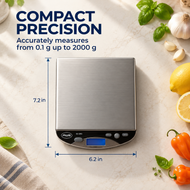
The ONYX-5K Digital Kitchen Weight Scale offers a practical capacity for everyday cooking and portioning. Its tare function allows users to place a plate or bowl on the platform before adding meat.
This model is useful for people who want a streamlined kitchen scale that can remain on the counter or be stored when it is not in use.
Best Uses
The ONYX-5K can be used for:
-
Chicken breast portions
-
Ground meat
-
Steak
-
Fish fillets
-
Deli meat
-
Hamburger patties
-
Prepared meal components
-
Lightweight packages
-
General cooking ingredients
Home Kitchen Versatility
A dedicated meat scale is not necessary for most households. The same scale can measure vegetables, rice, pasta, baking ingredients and lightweight packages as long as each item remains within the rated capacity.
Who Should Choose It?
Choose the ONYX-5K if you want a compact, multipurpose scale for everyday portioning and general kitchen use.
Best for Large Containers: VANILLA-5K
The VANILLA-5K Digital Kitchen Scale allows food to be weighed directly on its platform or inside the user’s own bowl with the tare function.
A large platform can be especially useful when working with meal-prep containers, dinner plates and bowls. The user can select a container that helps keep raw meat away from the electronic scale body.
Best Uses
The VANILLA-5K is suitable for:
-
Meal-prep containers
-
Ground meat mixtures
-
Chicken and turkey
-
Fish portions
-
Recipe preparation
-
Family dinners
-
Cooked protein portions
-
General kitchen weighing
Who Should Choose It?
This model is a practical choice for users who prefer their own plates, bowls and food-storage containers instead of an included weighing bowl.
Best Stylish Compact Scale: CAMEO-5K
The CAMEO-5K Digital Kitchen Scale features a tempered-glass surface and a slim, lightweight design. It can support a bowl or plate with the help of its tare function.
A thin kitchen scale is easier to store in a cabinet or drawer, making it useful for kitchens where counter space is limited.
Benefits of a Glass Platform
A glass surface offers a sleek appearance and a flat area that can be wiped after use. Raw meat should still be placed in a washable container to minimize contamination.
Best Uses
The CAMEO-5K is helpful for:
-
Everyday portions
-
Small meal-prep containers
-
Dinner plates
-
Compact kitchens
-
Occasional bulk preparation
-
General household cooking
Who Should Choose It?
Choose the CAMEO-5K if you want an attractive, slim scale that can handle common food portions without taking up excessive storage space.
Best Bowl Scale for Meat Mixtures: 5KBOWL
The 5KBOWL Digital Bowl Scale provides an 11-pound or 5,000-gram capacity, whole-gram readability and a removable two-liter bowl.
The included bowl is useful for foods that cannot be placed neatly on a flat platform. Ground meat, meatball mixtures and chopped ingredients remain contained as they are weighed and combined.
Best Uses
The 5KBOWL is particularly useful for:
-
Ground beef
-
Ground turkey
-
Meatball mixtures
-
Meatloaf ingredients
-
Burger preparation
-
Chopped cooked meat
-
Shredded chicken
-
Bulk meal preparation
-
Dividing food before freezing
Advantages of an Included Bowl
The bowl is sized to fit the scale, reducing the risk of blocking the display or shifting on the platform. It can be removed after weighing so it can be cleaned separately.
Who Should Choose It?
Choose the 5KBOWL if you frequently prepare ground meat recipes or prefer a contained weighing surface.
Best Stainless Steel Bowl Option: SAFFRON-5K-SS
The SAFFRON-5K-SS Digital Scale with Stainless Steel Bowl combines a 5,000-gram capacity with 1-gram readability and an included stainless steel bowl.
A stainless steel bowl is a practical option for mixing meatloaf, meatballs, burger seasonings and other recipes involving raw or cooked meat. The bowl can be removed from the electronic base for cleaning according to the product instructions.
Best Uses
This scale is suitable for:
-
Ground meat mixtures
-
Seasoned burger patties
-
Meatballs
-
Meatloaf
-
Chopped chicken
-
Cooked meat portions
-
Family-size recipes
-
Bulk preparation
Who Should Choose It?
Choose the SAFFRON-5K-SS if you want a durable-looking bowl scale for both weighing and mixing meat-based recipes.
Should Meat Be Weighed Raw or Cooked?
Meat can be weighed either raw or cooked. The important rule is to match the measured state of the food with the correct nutritional or recipe information.
If you weigh raw chicken, use nutrition information for raw chicken. If you weigh cooked chicken, use an entry that reflects the cooking method and cooked condition as closely as possible.
Why Cooking Changes Meat Weight
Cooking normally reduces the weight of meat because moisture and some fat are lost. A chicken breast that weighs eight ounces raw may weigh considerably less after cooking.
The amount lost depends on:
-
Meat type
-
Fat content
-
Cooking temperature
-
Cooking time
-
Preparation method
-
Final doneness
-
Whether bones or skin are present
-
Resting and draining
This means there is no universal conversion between raw and cooked meat weight.
Which Method Is More Consistent?
Weighing meat raw is often convenient when preparing recipes or dividing a new package. Package nutrition information may also be based on the uncooked product.
Weighing cooked meat may be more convenient when dividing a completed batch among meal-prep containers.
Either approach can work if it is used consistently and matched with the appropriate information.
Do Not Mix Raw Weight With Cooked Nutrition Data
Recording a cooked portion while using nutritional information for the same weight of raw meat can produce an inaccurate estimate. Cooked meat is usually more concentrated by weight because it has lost moisture.
How to Measure Raw Meat Portions
Step 1: Prepare a Clean Container
Select a plate, bowl or storage container that fits securely on the scale. Using a container helps prevent raw meat and juices from contacting the electronic platform.
Step 2: Place the Scale on a Stable Counter
Use a level, solid surface away from the sink, stove and areas where the scale could be splashed.
Step 3: Turn On the Scale
Allow it to initialize and display zero.
Step 4: Select the Unit
Choose grams, ounces or pounds based on your recipe or preparation plan.
Step 5: Add the Empty Container
Place the container in the center of the platform and make sure it does not touch any nearby object.
Step 6: Press Tare
Wait for the display to return to zero.
Step 7: Add the Meat
Use clean utensils or properly washed hands to transfer the meat. Add or remove small amounts until the target weight appears.
Step 8: Transfer or Seal the Portion
Move the portion to its cooking pan or seal the container for refrigeration or freezing.
Step 9: Clean and Sanitize
Wash the container, utensils and any surface that contacted raw meat. Clean the scale according to its care instructions.
How to Measure Cooked Meat Portions
Cooked meat is usually easier to handle because it is less likely to release raw juices. Food-safety practices still matter, particularly when meat is being cooled and stored.
-
Place a clean meal-prep container on the scale.
-
Press tare.
-
Add the desired amount of cooked meat.
-
Record the weight if needed.
-
Add other meal components after pressing tare again.
-
Refrigerate or freeze the meal within an appropriate period.
The FDA explains that the nutrients and calories shown on a Nutrition Facts label relate to the stated serving size, so confirm the weight and number of servings before performing calculations.
How to Divide a Bulk Meat Package Evenly
Suppose you purchase a package containing approximately five pounds of chicken and want to create ten equal portions.
Method One: Weigh Each Portion Individually
Place a container on the scale, press tare and add meat until the desired weight appears. Repeat for each package.
This method is simple when you already know the target portion.
Method Two: Weigh the Entire Amount First
Place a sufficiently large container on the scale, tare it and weigh all the meat after removing unwanted packaging or absorbent pads.
Divide the total weight by the number of portions desired.
If the usable meat weighs 2,200 grams and you want ten portions:
2,200 ÷ 10 = 220 grams per portion.
Measure nine portions of approximately 220 grams. Place the remaining meat in the final container, adjusting if necessary.
Method Three: Divide for Specific Recipes
Instead of creating identical portions, divide meat according to your common recipes:
-
454 grams for a one-pound recipe
-
227 grams for a half-pound recipe
-
Four equal burger patties
-
Two-person dinner portions
-
Family-size freezer portions
Label each package with the weight, meat type and freezing date.
How to Form Equal Burger Patties
A scale helps produce patties that cook at a similar rate.
-
Weigh the total ground meat.
-
Divide the weight by the number of patties.
-
Place a small piece of appropriate food-safe material or a plate on the scale.
-
Press tare.
-
Add the calculated amount of meat.
-
Form the patty without overworking it.
-
Repeat for the remaining portions.
If 900 grams of meat will make six burgers, each raw patty should weigh approximately 150 grams.
Identical weight does not guarantee identical thickness. Form each patty to a similar diameter and thickness for more consistent cooking.
Measuring Meatballs and Other Small Portions
For meatballs, weigh the entire mixture first and divide it by the intended quantity.
If the mixture weighs 1,200 grams and you want 30 meatballs, each should weigh approximately 40 grams.
A kitchen scale can also help portion:
-
Sausage mixtures
-
Dumpling fillings
-
Stuffed peppers
-
Taco meat
-
Meatloaf
-
Kebabs
-
Sliders
-
Homemade pet-food recipes prepared under professional guidance
Portion Weight Is Not the Same as Protein Weight
A 150-gram chicken portion does not contain 150 grams of protein. The total weight includes water, fat and other components.
Protein content depends on the specific food, cut, preparation and serving state. The Harvard Nutrition Source overview of protein explains that protein comes from many animal and plant foods and that source quality varies.
People with specific nutrition, medical or athletic goals should use appropriate dietary guidance rather than assuming that a standard meat portion is ideal for everyone.
Understanding Serving Size and Portion Size
“Serving size” and “portion” are often used interchangeably, but they do not always mean the same thing.
A serving size on a Nutrition Facts label is a standardized amount used to present nutritional information. It is not necessarily an individualized recommendation.
A portion is the amount a person chooses to prepare or eat. That portion may be smaller or larger than the serving size listed on a label.
The FDA’s serving-size guidance explains that serving information appears at the top of the Nutrition Facts label and that listed nutrient values usually relate to one serving.
A food scale allows you to compare your measured portion with the gram or ounce amount used on the label.
Food Safety When Weighing Meat
A scale improves portion consistency, but it does not determine whether meat is safe to eat. Weight and temperature are entirely different measurements.
Prevent Cross-Contamination
Raw meat should be kept separate from cooked food and ready-to-eat ingredients. Use separate containers and utensils, and clean any surface exposed to raw juices.
The FDA’s meat, poultry and seafood safety guidance advises against placing cooked food on an unwashed plate that previously held raw meat.
Use a Food Thermometer
Appearance, texture and cooking time are not reliable substitutes for checking internal temperature. Use an appropriate food thermometer in the thickest part of the meat.
The USDA safe minimum internal temperature chart provides current guidance for meat, poultry, seafood and leftovers.
Keep the Scale Dry
Do not rinse raw juices from the electronic scale under running water unless the model is specifically designed for that cleaning method. Wipe and sanitize it according to the manufacturer’s instructions.
A removable plate or bowl helps protect the scale from direct contact.
Refrigerate Promptly
Do not allow raw or cooked meat to remain at room temperature longer than food-safety guidance permits. Complete the weighing process efficiently and return food to refrigeration.
The federal FoodSafety.gov cold-food storage charts provide general refrigerator and freezer storage guidance for different foods.
Common Meat-Weighing Mistakes
Forgetting to Tare the Container
If the scale includes the plate’s weight, the displayed meat portion will be too high. Place the empty container first and press tare.
Overloading the Scale
A bulk package and heavy bowl can exceed the scale’s maximum capacity. Use a higher-capacity model or divide the package before weighing.
Letting a Large Plate Touch the Counter
If part of the container rests on another surface, the scale is not supporting its full weight. Use a smaller container or larger platform.
Mixing Raw and Cooked Measurements
Decide whether your recipe or nutritional reference uses raw or cooked weight, and measure the meat in the same state.
Weighing Packaging With the Meat
Store packaging, trays and absorbent pads should not be included when determining usable meat weight.
Using an Unstable Surface
Do not operate the scale on a cutting board that rocks, a towel or an uneven countertop.
Assuming Every Cut Has the Same Nutrition
Different cuts and fat percentages can contain different amounts of calories, protein and fat. Match the food to an appropriate database entry or product label.
Confusing Ounces With Fluid Ounces
An ounce displayed by a food scale is a measurement of mass. A fluid ounce measures volume. They are not interchangeable.
How to Check Scale Consistency
To perform a basic repeatability check:
-
Put the scale on a level surface.
-
Turn it on and allow it to reach zero.
-
Place an appropriate reference item in the center.
-
Record the displayed weight.
-
Remove the item.
-
Wait for the display to return to zero.
-
Repeat several times.
The readings should remain reasonably consistent within the model’s specifications.
If the result changes unexpectedly, replace weak batteries, remove sources of vibration, check that the scale is level and confirm that nothing touches the platform.
Calibrate only according to the manufacturer’s manual and use the specified calibration weight.
Frequently Asked Questions
What Is the Best Food Scale for Measuring Meat?
For most homes, the best meat portion scale has at least a five-kilogram capacity, one-gram readability, tare functionality and a platform large enough for a plate or meal-prep container.
Is Five Kilograms Enough Capacity?
Five kilograms or 11 pounds is enough for most individual portions and family recipes. A 10-kilogram model may be better for bulk packages or heavy containers.
Should I Weigh Chicken Raw or Cooked?
Either method can work. Match the measured state with the nutritional or recipe information being used. Do not measure cooked chicken and calculate it with an equal raw-weight entry.
How Much Weight Does Meat Lose When Cooked?
There is no single percentage. Weight loss depends on the cut, fat content, cooking method, temperature, time and final doneness.
Can Raw Meat Be Placed Directly on a Food Scale?
It is better to place raw meat in a washable container or on an appropriate barrier. This helps prevent contamination of the electronic platform.
Is One-Gram Readability Enough?
Yes. One-gram increments provide sufficient resolution for common meat, poultry and seafood portions.
Can a Food Scale Measure Protein?
A food scale measures mass, not protein content. Protein must be estimated using reliable nutrition information for the specific food and measured amount.
How Do I Measure Four Ounces of Meat?
Place an empty container on the scale, press tare, select ounces and add meat until the display shows four ounces. Alternatively, use grams if your reference provides a gram amount.
Should I Weigh Meat Before or After Removing Fat?
Weigh the portion in the state that matches how it will be eaten and how the nutritional information is defined. If visible fat will be discarded, weighing the edible portion may provide a more useful result.
Can I Use a Bathroom Scale to Weigh Meat?
A bathroom scale is not designed for small food portions and normally lacks the necessary readability. Use a kitchen or food scale.
How Do I Clean a Food Scale After Weighing Meat?
Remove and wash the food-contact container. Wipe the scale according to the product’s care instructions. Do not immerse the electronic base.
Can I Measure Frozen Meat?
Yes, provided the package fits securely and remains within the scale’s capacity. Remove excess packaging if you need the net meat weight.
Can a Scale Help With Freezer Organization?
Yes. Weigh each package, label it with the contents and weight, and record the freezing date. This makes it easier to select the correct amount for future recipes.
Final Verdict
The best food scale for measuring meat portions should make your preparation process simpler, not more complicated.
For everyday home use, a five-kilogram model with whole-gram readability and tare functionality provides a versatile balance. It can measure individual chicken breasts, steaks, fish fillets, ground meat and complete meal-prep containers.
A 10-kilogram scale is better for bulk packages, heavy bowls and large batches. A bowl scale is particularly useful for ground meat mixtures, while a flat-platform design accommodates different plates and containers.
Whichever model you select, use it on a hard, level surface. Place raw meat in a clean container, press tare before weighing and keep the total load below the rated capacity. Match raw measurements with raw nutritional data and cooked measurements with cooked data.
Most importantly, remember that a kitchen scale measures weight—not doneness, safety or individualized nutritional needs. Use safe handling practices and verify cooking temperatures with a food thermometer.
With the right food scale and a consistent weighing method, dividing meat for recipes, meal prep and freezer storage becomes faster, cleaner and much more predictable.