
Best Kitchen Scale for Measuring Flour Accurately
Published by AWS Team on 10th Sep 2026
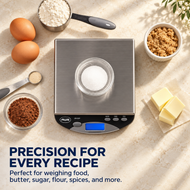
The best kitchen scale for measuring flour can transform the quality and consistency of homemade bread, cakes, cookies, pastries and pizza dough. Flour is one of the most frequently mismeasured ingredients in the kitchen because its volume changes depending on how it is stored, scooped and packed. A cup of flour measured by one baker may contain substantially more flour than a cup measured by someone else.
That inconsistency can alter an entire recipe. Too much flour can produce dry cake, dense bread, crumbly cookies and stiff dough. Too little flour can create batter that spreads excessively, bread dough that is difficult to handle or baked goods that lack structure.
A digital kitchen scale solves this problem by measuring flour according to mass rather than volume. If a recipe requires 300 grams of flour, the baker can add flour until the display reaches 300 grams. There is no need to decide whether the flour should be scooped, spooned, sifted, packed or leveled.
For most home bakers, the best flour scale combines accurate readings, a useful capacity, an easy-to-operate tare function and a platform large enough to support a mixing bowl. Some bakers need an 11-pound scale for large batches of bread, while others benefit from 0.1-gram readability for smaller recipes and specialty ingredients.
This complete guide explains how to select and use the best kitchen scale for flour, why weighing is more consistent than relying on cups and which American Weigh Scales models are suited to different types of baking.
Why Flour Is Difficult to Measure With Cups
Flour may look uniform, but it contains countless tiny particles with air spaces between them. The amount that fits inside a measuring cup depends on how much air remains between those particles.
If you stir or sift flour before measuring it, more air may remain in the cup. If you push the measuring cup directly into a bag, the flour can become compressed. Tapping the cup on a counter, shaking it or pressing the surface with a utensil can pack even more flour into the same space.
As a result, two cups that look equally full may contain different amounts of flour by weight.
Scooping Can Compress Flour
When a measuring cup is pushed directly into a container, the flour can become compressed against the bottom and sides. The baker may then level the top and assume the measurement is accurate, even though the cup contains more flour than the recipe developer intended.
That extra flour absorbs additional moisture from the recipe. A cake batter may become too thick, cookie dough may lose the right balance of fat and flour, and bread dough may become firmer than expected.
Flour Settles During Storage and Transportation
Flour becomes aerated when poured, stirred or sifted, but it settles when stored. A freshly opened bag may have a different density from a container that has remained undisturbed for several weeks.
Humidity, handling and the type of flour can also affect how it behaves. Whole-wheat flour, bread flour, cake flour and all-purpose flour do not necessarily occupy volume in exactly the same way.
Different Bakers Use Different Methods
Some recipes instruct readers to spoon flour into the cup and level it. Others assume a dip-and-sweep method. Many recipes simply say “one cup of flour” without identifying the measuring technique.
A recipe developer’s cup may therefore represent a different amount of flour than the reader’s cup. Weight reduces that ambiguity because a stated gram measurement creates a clearer target.
The King Arthur Baking ingredient weight chart provides weight equivalents for flour and many other baking ingredients. It demonstrates why a dependable ingredient chart can be valuable when adapting volume-based recipes.
Why a Kitchen Scale Is Better for Measuring Flour
A digital kitchen scale measures mass directly. It does not matter whether the flour was packed inside a bag, sifted into a container or transferred with a spoon. The baker simply adds flour until the target weight appears.
This approach delivers several practical benefits.
Greater Recipe Consistency
Weighing flour helps reproduce the same ratio of flour to liquid each time a recipe is prepared. This is especially important in baking because flour provides structure and interacts with water, fats, sugar and leavening agents.
When the amount of flour changes, the relationship among all those ingredients changes too. Using a scale makes that relationship easier to control.
Easier Recipe Scaling
Recipes written in grams can be doubled, halved or adjusted with straightforward arithmetic. A recipe using 400 grams of flour becomes 800 grams when doubled or 200 grams when halved.
This is much easier than dividing or multiplying awkward cup fractions. Professional bakers rely heavily on weight because it makes scaling and ratio management more efficient.
Fewer Measuring Tools
A baker can place one mixing bowl on the scale, press tare and weigh several ingredients directly into the same container. This can reduce the number of cups, scoops and bowls that need to be washed.
Better International Recipe Compatibility
Many recipes published outside the United States list flour in grams. A kitchen scale allows the recipe to be followed directly without searching for an approximate cup conversion.
The gram is part of the International System of Units. The National Institute of Standards and Technology’s guidance on SI mass explains the relationship among grams, kilograms and standardized mass measurements.
Easier Dough Evaluation
Once you become familiar with weight-based baking, you can understand a recipe more quickly. A bread recipe with 500 grams of flour and 350 grams of water has a different hydration level from one with 500 grams of flour and 300 grams of water.
Weight-based measurements allow bakers to compare these ratios without the variation introduced by cups.
What to Look for in the Best Kitchen Scale for Flour
The best kitchen scale for measuring flour should be selected according to the size and type of recipes you prepare. Capacity and readability are important, but they are not the only considerations.
You can compare different capacities and designs in the American Weigh Scales collection of digital kitchen and food scales.
Maximum Capacity
Maximum capacity is the greatest total load the scale can safely support. This total includes the mixing bowl and every ingredient inside it.
A five-kilogram or 11-pound capacity is versatile for most home baking. It can accommodate a moderately heavy mixing bowl, flour, water and other ingredients for bread, cakes or cookies.
A lower-capacity scale may still be suitable for measuring flour separately in a lightweight bowl. However, it may not have enough capacity to hold an entire large recipe.
Readability
Readability is the smallest change shown by the scale.
A scale with 1-gram readability displays whole grams. This is sufficient for measuring flour in most recipes because a difference of one gram is very small compared with a typical flour quantity of 200, 500 or 1,000 grams.
A scale with 0.1-gram readability provides more detailed measurements. It can be useful for small flour quantities, test recipes and ingredients such as yeast, salt, baking powder and spices.
Platform Size
The platform must support the container without allowing it to tilt, slide or touch surrounding objects. A platform that is too small for a wide bowl may also make the display difficult to see.
If you regularly mix dough directly on the scale, choose a model with a stable platform and a display positioned where it remains visible.
Tare Function
The tare function resets the displayed weight to zero after a bowl or container has been placed on the scale.
Tare allows you to exclude the displayed weight of the bowl and measure only the flour added afterward. You can also press tare between ingredients and build an entire recipe in one container.
Taring does not physically remove the bowl’s weight from the scale. The bowl and ingredients must still remain below the scale’s maximum capacity.
Unit Selection
Grams are generally the easiest unit for precise baking. They avoid decimal-heavy ounce measurements and make recipe scaling simpler.
A versatile kitchen scale may also display ounces, pounds or other units. This is convenient when switching between American and international recipes.
Display Visibility
Large mixing bowls can cast shadows over the display or block it completely. A backlit screen and sensible display placement make the scale easier to use.
Check the display before pouring flour. If you need to bend down, lift the bowl or look from an awkward angle, a different container or scale design may work better.
Stability
The scale should sit firmly on a hard, level surface. Stabilizing feet can reduce movement while flour is added or mixed.
Do not use the scale on a towel, padded mat, unstable table or uneven stovetop. A soft or tilted surface can affect the measurement.
Ease of Cleaning
Flour dust can settle around the scale’s platform and buttons. A simple exterior and removable bowl make routine cleaning easier.
Never rinse or immerse the electronic base unless the product is specifically designed for that treatment. Use the cleaning method provided by the manufacturer.
Best Overall Flour Scale: 5KBOWL Digital Bowl Scale
The 5KBOWL Digital Bowl Scale is an excellent overall option for measuring flour, preparing bread dough and handling family-size baking recipes.
It offers a maximum capacity of 5,000 grams or 11 pounds with readability of 1 gram or 0.1 ounce. That combination provides sufficient capacity for many mixing bowls and large batches while maintaining the whole-gram precision needed for flour.
The scale also includes a removable two-liter bowl, tare functionality, a backlit LCD and simple two-key operation.
Why It Works Well for Flour
A five-kilogram capacity is useful when flour is not the only ingredient being weighed. The baker can place a mixing bowl on the scale, tare it, add flour and continue adding water, sugar or other ingredients.
Because flour is normally measured in quantities much larger than one gram, whole-gram readability is appropriate for most recipes. The 5KBOWL’s included container can hold loose flour without allowing it to spread across the platform or collect around the controls.
Best Uses
The 5KBOWL is particularly useful for:
-
Bread dough
-
Pizza dough
-
Cakes
-
Cookies
-
Muffins
-
Pancake and waffle batter
-
Large family recipes
-
Weekly baking preparation
-
Dividing bulk flour
-
Measuring flour for storage
Who Should Choose It?
Choose the 5KBOWL if you want one general-purpose baking scale that balances capacity, simplicity and a convenient removable bowl.
It is especially suitable for bakers who prepare medium or large recipes and want to weigh several ingredients in one container.
Best High-Precision Flour Scale: 2K-BOWL Digital Bowl Scale
The 2K-BOWL Digital Bowl Scale provides a 2,000-gram capacity with 0.1-gram readability.
It includes a removable two-liter bowl, a backlit display, tare functionality and multiple measurement modes.
Why Choose 0.1-Gram Readability?
Most flour measurements do not require tenths of a gram, but additional readability becomes helpful when preparing:
-
Small test batches
-
Single-serving baked goods
-
Specialty pastries
-
Small gluten-free recipes
-
Preferments
-
Sourdough experiments
-
Recipe-development samples
-
Precise mixtures containing several low-weight ingredients
A baker may also use the same scale for yeast, salt, baking powder and other ingredients that are measured in much smaller quantities than flour.
The Capacity Tradeoff
The 2K-BOWL supports up to 2,000 grams or approximately 4.4 pounds. That is enough for many cakes, cookies and small bread recipes, but the total includes the bowl.
If a mixing bowl weighs 600 grams, approximately 1,400 grams of capacity remain for flour and other ingredients. This may be enough for a typical home recipe but not for a large batch of dough.
Who Should Choose It?
Choose the 2K-BOWL if you prefer finer readability and generally prepare small or medium batches. It is a strong option for precise bakers who are willing to trade some maximum capacity for more detailed measurements.
Best Flat-Platform Option: AMW-2000 Compact Digital Bench Scale
Some bakers prefer using their own mixing bowls instead of an included bowl. The AMW-2000 Compact Digital Bench Scale provides a large stainless steel weighing platform, a 2,000-gram capacity and 0.1-gram readability.
Its backlit LCD, rubber stabilizing feet and multiple measurement units make it useful for flour, coffee and general kitchen ingredients.
Advantages of a Flat Stainless Steel Platform
A flat platform accommodates different types of containers. You can use a lightweight ingredient bowl, a small mixing bowl or another suitable container as long as it remains stable and the total weight does not exceed capacity.
The stainless steel surface also provides a clean, professional appearance and can be wiped after use.
Best Uses
The AMW-2000 is well suited to:
-
Measuring flour separately before mixing
-
Small and medium baking recipes
-
Recipe testing
-
Coffee preparation
-
Weighing yeast and salt
-
Comparing flour portions
-
Dividing dough
-
General household weighing
Who Should Choose It?
Choose this model if you want 0.1-gram readability but prefer the flexibility of a flat platform over an integrated bowl design.
Best Stainless Steel Bowl Scale: SAFFRON-5K-SS
The SAFFRON-5K-SS Digital Scale with Stainless Steel Bowl combines a five-kilogram capacity, 1-gram readability and an included dishwasher-safe stainless steel bowl.
Its recessed platform allows the included bowl to sit securely while also letting the user select another compatible container.
Why Stainless Steel Works for Baking
A stainless steel bowl can be useful when measuring flour, mixing dough and handling ingredients that may stain or leave odors in other materials.
Stainless steel also suits kitchens where the scale remains visible on the counter. Its appearance coordinates well with common appliances and baking equipment.
Best Uses
This scale is a strong option for:
-
Bread and pizza dough
-
Cake batter
-
Cookie dough
-
Large flour quantities
-
Family baking
-
Baking preparation
-
Ingredient blending
-
Recipes containing aromatic ingredients
Who Should Choose It?
Choose the SAFFRON-5K-SS if you want the capacity of a general baking scale combined with the convenience and appearance of a stainless steel bowl.
Best High-Capacity Option: PrepLite-10KG
Bakers who prepare very large batches may need more than a standard five-kilogram capacity. The PrepLite-10KG Kitchen Scale offers a capacity of up to 10 kilograms with 1-gram readability.
This higher capacity can be useful for bulk baking, large dough batches, food preparation and kitchens where heavy containers are common.
When a 10-Kilogram Capacity Makes Sense
A 10-kilogram scale may be appropriate if you:
-
Bake several loaves at once
-
Prepare dough for large gatherings
-
Operate a home-based baking business
-
Divide bulk flour
-
Use large stainless steel mixing bowls
-
Prepare commercial-size recipes
-
Need extra capacity for both containers and ingredients
For ordinary household recipes, this capacity may be more than necessary. However, a generous weight limit provides flexibility and reduces the risk of exceeding the scale’s rated load.
Who Should Choose It?
Choose the PrepLite-10KG if capacity is your primary concern and you regularly prepare recipes that are too heavy for a typical kitchen scale.
How Much Precision Do You Need for Flour?
For most baking recipes, a scale with 1-gram readability is precise enough for flour. A recipe calling for 500 grams of flour will not usually be transformed by a difference of one gram.
The need for greater precision increases as ingredient quantities become smaller.
One-Gram Readability
One-gram readability is appropriate for:
-
Flour
-
Water
-
Milk
-
Sugar
-
Butter
-
Large dough portions
-
Fruit
-
Chocolate
-
Prepared fillings
0.1-Gram Readability
Tenth-of-a-gram readability is helpful for:
-
Yeast
-
Salt
-
Baking powder
-
Baking soda
-
Spices
-
Small recipe tests
-
Specialty additives
-
Very small batches
A practical baking setup may include a higher-capacity whole-gram scale for flour and dough plus a smaller precision scale for low-weight ingredients.
How to Weigh Flour Correctly
Step 1: Place the Scale on a Level Surface
Use a hard, stable countertop. Make sure none of the scale’s feet are hanging over an edge and that the scale does not rock when touched.
Step 2: Turn On the Scale
Allow the scale to initialize and display zero before placing anything on the platform.
Step 3: Select Grams
Set the measurement mode to grams if the recipe provides metric weights. Confirm the unit indicator before adding flour.
Step 4: Add the Empty Bowl
Place the bowl in the center of the platform. Make sure it does not touch a wall, utensil, appliance or other object.
Step 5: Press Tare
The display should return to zero. This allows you to measure the flour without manually subtracting the bowl’s weight.
Step 6: Add Flour Gradually
Spoon or pour flour into the bowl while watching the display. Slow down as you approach the target weight.
If you add too much, remove a small amount with a clean spoon. Avoid plunging your hand into flour that will be shared or stored.
Step 7: Let the Reading Stabilize
Wait briefly for the display to settle. Do not hold or touch the bowl while reading the weight.
Step 8: Confirm the Measurement
Check the unit and number before adding the flour to the recipe. If you are building the entire recipe in the same bowl, record or confirm the flour weight before pressing tare again.
How to Convert Cups of Flour to Grams
There is no universal cup-to-gram conversion for every type of flour or every recipe source. The intended weight depends on the flour and the measurement convention used by the recipe developer.
A flour manufacturer or recipe publisher may define one cup according to its own testing. When possible, use the weight supplied with the original recipe.
If the recipe only lists cups:
-
Identify the exact flour type.
-
Consult a reliable ingredient-weight chart.
-
Use the gram value associated with that source.
-
Record the conversion for future use.
-
Adjust only if the recipe consistently requires it.
Do not use one conversion for all flours. Almond flour, bread flour, cake flour, rye flour and whole-wheat flour may have different weights per cup.
The USDA FoodData Central database can provide additional information about foods and standardized reference portions. However, recipe-specific weight guidance from the flour producer or recipe developer is often the most direct conversion source.
How Flour Weight Affects Baking Results
Bread
Bread depends heavily on the relationship between flour and water. Adding excess flour reduces hydration and can create a stiffer dough with a denser finished texture.
Weight-based measurement makes hydration easier to calculate and reproduce.
Cake
Too much flour can make cake dry, heavy or tough. Too little flour may weaken the structure, causing the cake to sink or fail to hold its shape.
Cookies
Additional flour often reduces spread and creates a drier, more cake-like texture. Too little flour may cause cookies to spread excessively or become greasy.
Muffins and Quick Breads
Incorrect flour measurement can disturb the balance between dry and wet ingredients. This may affect tenderness, rise and crumb structure.
Pastry
Pastry recipes require careful control of flour, fat and water. Small changes can affect flakiness, tenderness and how easily the dough can be rolled.
Gluten-Free Baking
Gluten-free recipes often combine several flours and starches. Their densities can vary considerably, making weight-based measurement especially useful.
Using Baker’s Percentages
Baker’s percentage expresses each ingredient as a percentage of the flour weight. Flour is always treated as 100%.
For example:
-
Flour: 500 grams, or 100%
-
Water: 350 grams, or 70%
-
Salt: 10 grams, or 2%
-
Yeast: 5 grams, or 1%
This system helps bakers understand and modify formulas. If the flour weight changes, the other ingredients can be recalculated according to the same ratios.
The Bread Bakers Guild of America provides educational resources and professional context for bakers interested in formulas, production methods and bread-making standards.
Measuring Different Types of Flour
All-Purpose Flour
All-purpose flour is used in a wide range of recipes. Weighing it helps maintain consistency across cakes, cookies, breads, sauces and pastries.
Bread Flour
Bread flour is commonly used for yeast doughs. Accurate weight is essential when calculating hydration and baker’s percentages.
Cake Flour
Cake flour is used when a softer, more tender texture is desired. Adding too much can still make the final product dry, so scale measurement is valuable.
Whole-Wheat Flour
Whole-wheat flour absorbs water differently from refined flour. Accurate measurement helps bakers make controlled hydration adjustments.
Almond Flour
Almond flour can compact in a cup and behaves differently from wheat flour. Weight provides a more dependable measurement for macarons, cakes, cookies and gluten-free recipes.
Coconut Flour
Coconut flour is highly absorbent and is often used in relatively small quantities. Accurate weighing is important because a modest difference may substantially affect batter consistency.
Rye Flour
Rye flour is frequently combined with wheat flour in bread formulas. Measuring each flour separately by weight makes the ratio easier to control.
Common Mistakes When Weighing Flour
Forgetting to Tare
If you do not tare the bowl, the displayed number includes the container. Press tare after placing the empty bowl on the platform.
Taring Too Early
Allow the bowl to settle before pressing tare. If it is still moving or touching another object, the zero point may be unreliable.
Exceeding Capacity
Remember that taring does not eliminate the bowl’s physical weight. A heavy bowl and large recipe can exceed a low-capacity scale.
Allowing the Bowl to Block the Display
Use the included bowl or select a container that allows you to see the screen. Do not lift or tilt the bowl to read the number.
Measuring on a Soft Surface
Towels and padded mats can create unstable support. Use a solid, level countertop.
Pouring Too Quickly
Flour is easy to add but inconvenient to remove after it has been combined with other ingredients. Pour slowly near the target weight.
Confusing Grams and Ounces
Always confirm the measurement unit. A recipe requiring 300 grams will not work if the scale is accidentally displaying ounces.
Treating Readability as Guaranteed Accuracy
A display showing tenths of a gram does not automatically guarantee that every measurement is accurate to exactly one tenth of a gram. Follow calibration instructions and operate the scale under suitable conditions.
Flour Safety and Kitchen Hygiene
Raw flour is an agricultural product and may contain microorganisms before it is cooked. Avoid tasting raw dough or batter, and clean utensils and surfaces after handling flour.
The FDA’s guidance on handling flour safely explains why raw flour should be treated carefully and why foods containing flour should be cooked according to recipe instructions.
When using a kitchen scale:
-
Keep raw flour away from ready-to-eat foods.
-
Wash removable bowls according to their instructions.
-
Wipe flour dust from the scale body.
-
Wash hands after handling raw dough.
-
Do not allow wet ingredients to enter the scale’s electronics.
-
Clean the work surface after baking.
-
Avoid returning flour from a used bowl to the original package.
How to Test a Kitchen Scale for Consistency
A simple repeatability check can help identify obvious problems.
-
Place the scale on a level counter.
-
Turn it on and wait for zero.
-
Place an appropriate reference weight in the center.
-
Record the result.
-
Remove the weight.
-
Wait for the scale to return to zero.
-
Repeat several times.
The readings should remain reasonably consistent within the scale’s specifications.
If the results change significantly, check for low batteries, vibration, drafts, unstable surfaces and off-center placement. Consult the manual before attempting calibration.
For scales used in commercial transactions, additional legal and certification requirements may apply. The NIST Handbook 44 program addresses technical requirements for commercial weighing and measuring devices. A household baking scale should not be assumed to be legal for trade unless it is specifically approved for that purpose.
Frequently Asked Questions
What Is the Best Kitchen Scale for Measuring Flour?
For most home bakers, the best option is a digital scale with at least a 5,000-gram capacity, 1-gram readability, a tare function and a platform or bowl large enough for common recipes.
Bakers preparing smaller, precision-focused recipes may prefer 0.1-gram readability.
Is a Food Scale More Accurate Than Measuring Cups for Flour?
A food scale generally provides a more repeatable way to measure flour because it measures mass instead of relying on the flour’s variable volume.
Should Flour Be Measured in Grams or Ounces?
Both units can work, but grams are especially convenient for baking. They simplify recipe scaling and avoid complicated ounce fractions.
Is One-Gram Precision Enough for Flour?
Yes. Whole-gram readability is sufficient for most flour measurements. Finer readability is more valuable for ingredients used in small amounts.
Should I Weigh Flour Before or After Sifting?
Follow the recipe’s wording. “One hundred grams of sifted flour” may indicate a different process from “one hundred grams of flour, sifted.” When the recipe is unclear, weigh the flour first and sift it afterward for consistency.
Can I Weigh Flour Directly in the Mixing Bowl?
Yes. Place the empty bowl on the scale, press tare and add flour until the target weight appears. Confirm that the combined weight remains below the scale’s capacity.
Why Does My Flour Measurement Keep Changing?
Possible causes include an unstable surface, weak batteries, a bowl touching another object, air movement, vibration or flour being added while the display is still settling.
Can I Use a Kitchen Scale for Yeast?
Yes, but check the scale’s readability. A 0.1-gram scale is usually more useful for small yeast quantities than a scale limited to whole grams.
Does Tare Affect Accuracy?
Tare is designed to reset the displayed value so the contents can be measured separately. However, the total physical load still matters, and the scale must remain within capacity.
What Capacity Is Best for Bread Making?
A five-kilogram or 11-pound scale works well for many home bread recipes. Larger batches or heavy mixing bowls may justify a 10-kilogram model.
How Do I Clean Flour From a Digital Scale?
Remove and wash the bowl according to its care instructions. Wipe the electronic base with an appropriate dry or slightly damp cloth. Do not submerge the scale.
Can I Store My Mixing Bowl on the Scale?
It is better to store the scale without weight on the platform. Continuous pressure can strain the weighing mechanism.
Final Verdict
The best kitchen scale for measuring flour accurately is not necessarily the model with the most features. It is the scale that offers the right capacity, readability, platform design and tare function for the recipes you prepare.
For most home bakers, a five-kilogram scale with one-gram readability provides an excellent balance. It can support a mixing bowl and a substantial recipe while measuring flour precisely enough for bread, cakes, cookies and pastries.
For small batches, recipe development and ingredients requiring greater resolution, a 2,000-gram scale with 0.1-gram readability may be more appropriate. High-volume bakers may prefer a 10-kilogram model that accommodates heavy bowls and large dough batches.
Regardless of the model, the technique remains simple: place the scale on a level surface, select grams, add the empty bowl, press tare and gradually add flour until the target weight appears.
That small change—from measuring flour by volume to measuring it by weight—can make baking more consistent, recipes easier to scale and results easier to reproduce.