
Best Kitchen Scale for Measuring Loose-Leaf Tea
Published by AWS Team on 10th Sep 2026
The best kitchen scale for measuring loose-leaf tea should be precise enough to register small portions, simple enough to use every day, and compact enough to keep near your tea-making station.
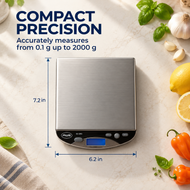
For most tea drinkers, a digital scale with 0.1-gram readability provides the right balance between precision and convenience. It can accurately measure common tea portions while still offering enough capacity for a cup, teapot, gaiwan, or brewing container.
A scale with 0.01-gram readability may be even more useful for expensive teas, tiny gongfu-style servings, concentrated herbal blends, or recipe testing. Larger kitchen scales are better when you want to place the entire teapot on the weighing platform and measure the water as well as the leaves.
Measuring loose-leaf tea by mass makes brewing more repeatable. Teas vary dramatically in leaf size, shape, density, and processing style. A teaspoon of tightly rolled oolong may contain much more tea than a teaspoon of large white-tea leaves.
When you weigh tea in grams, you remove that uncertainty. You can repeat a successful cup, adjust a disappointing one, compare different teas more fairly, and calculate precisely how many servings remain in a package.
This guide explains what to look for in a tea scale, how much precision you need, how to select the right capacity, and how to weigh loose leaves for different brewing methods.
Why Weigh Loose-Leaf Tea?
Measuring tea with a spoon seems simple, but spoon measurements are inconsistent when the ingredients have different shapes and densities.
Loose-leaf tea can include:
-
Long, twisted leaves
-
Flat leaves
-
Tightly rolled pellets
-
Broken leaves
-
Fine particles
-
Powdered ingredients
-
Dried flowers
-
Pieces of fruit
-
Bark, roots, or seeds
-
Large, loosely packed herbal ingredients
A teaspoon of dense gunpowder-style green tea can weigh considerably more than a teaspoon of large, airy white-tea leaves. Even two spoonfuls from the same package can differ if small particles settle toward the bottom.
Weighing solves this problem by measuring the actual mass of the tea.
If you brew five grams of tea today and enjoy the result, you can use five grams again tomorrow. If the cup is too weak, you might increase the dose to 5.5 grams while keeping the water temperature and brewing time unchanged.
This makes recipe adjustments deliberate rather than random.
A digital scale can also help you:
-
Compare the strength of different tea varieties
-
Track how much tea you use
-
Divide bulk tea into individual portions
-
Package tea samples consistently
-
Blend multiple ingredients by percentage
-
Control the cost per serving
-
Reproduce recipes for customers or guests
-
Measure water directly in grams
-
Reduce waste from using more tea than necessary
You can compare precision and capacity options in the complete collection of American Weigh Scales kitchen scales.
Quick Answer: What Is the Best Scale for Loose-Leaf Tea?
For most loose-leaf tea drinkers, choose a scale with the following specifications:
-
Measurement in grams
-
Readability of 0.1 gram
-
Capacity of at least 500 grams
-
A reliable tare function
-
A stable weighing platform
-
A clear digital display
-
Compact dimensions
-
Simple controls
-
A removable or easy-to-clean tray
If you only intend to weigh dry tea leaves, a compact pocket scale with a capacity between 100 and 500 grams is usually sufficient.
If you want to place a teapot, brewing pitcher, or mug on the scale and measure water during preparation, look for a kitchen scale with at least 2,000 grams of capacity. A 5,000-gram model provides even more flexibility for heavy ceramic teaware.
A 0.01-gram scale is useful for very small portions and detailed blending work, but most household tea recipes do not require measurement to the nearest hundredth of a gram.
Why Volume Measurements Are Unreliable for Tea
Volume measures how much space an ingredient occupies. Mass measures how much material is actually present.
This distinction matters because tea leaves do not pack into a spoon uniformly.
Imagine comparing three teas:
-
A tightly rolled oolong
-
A broken black tea
-
A large-leaf white tea
The rolled oolong pieces fit together closely and leave relatively little empty space. The white-tea leaves may extend beyond the spoon while leaving large air gaps between them. A spoonful of each tea can therefore contain a different mass.
Leaf shape is not the only variable. Tea near the bottom of a package may contain more broken pieces and fine particles than tea near the top. Those smaller particles fit more densely into a spoon.
Humidity can also change the physical characteristics of dried ingredients. Tea should be stored carefully, but repeated opening and environmental exposure may still influence how it handles.
A digital scale bypasses these differences. Five grams remains five grams whether the leaves are rolled, flat, twisted, broken, or fluffy.
Understanding Scale Readability
Readability is the smallest increment a scale displays.
A scale with 1-gram readability shows measurements such as:
-
3 grams
-
4 grams
-
5 grams
A scale with 0.1-gram readability can show:
-
3.8 grams
-
3.9 grams
-
4.0 grams
A scale with 0.01-gram readability may show:
-
3.98 grams
-
3.99 grams
-
4.00 grams
Greater readability gives you more detailed information, but more decimal places are not always necessary.
Is 1-Gram Readability Enough for Tea?
One-gram readability can be acceptable for large batches. If you are making several liters of iced tea with 30 or 40 grams of leaves, a one-gram difference represents a relatively small percentage of the total dose.
It is less suitable for a single cup.
If a recipe calls for three grams of tea, adding one extra gram increases the dose by approximately 33%. That can substantially change the strength, bitterness, and cost of the cup.
A one-gram scale may also round a measurement, making it difficult to determine exactly how much tea is on the platform.
Is 0.1-Gram Readability Good for Loose Tea?
Yes. A scale reading in tenths of a gram is ideal for most home tea preparation.
It lets you distinguish among portions such as 2.5, 3.0, and 3.5 grams without requiring laboratory-level handling.
The KF-5KG digital kitchen scale combines 0.1-gram readability with a capacity of 5,000 grams. It is a versatile option for people who want to measure small tea portions as well as teapots, brewing water, cooking ingredients, and larger containers.
When Is 0.01-Gram Readability Helpful?
Hundredth-gram readability may be useful when:
-
Measuring very small servings
-
Portioning expensive tea
-
Creating tea blends by percentage
-
Comparing samples
-
Measuring powdered ingredients
-
Working with potent herbs or spices
-
Calculating exact package quantities
-
Testing how consistently portions are filled
-
Dividing a rare tea into several equal servings
The ACPRO-220 digital pocket scale offers a 220-gram capacity with 0.01-gram readability. Its fine resolution is well suited to measuring tea leaves separately before transferring them to a pot, infuser, or gaiwan.
Accuracy, Resolution, and Repeatability
These terms are related but should not be treated as interchangeable.
Resolution
Resolution or readability is the smallest displayed increment.
Accuracy
Accuracy describes how close the scale’s measurement is to the actual mass of the item.
Repeatability
Repeatability refers to whether the scale produces the same or nearly the same result when the same item is weighed multiple times under the same conditions.
A useful tea scale should provide stable, repeatable readings. It should return to zero correctly after taring and should not drift significantly while the tea sits on the platform.
The measurement system used for recipes also matters. The National Institute of Standards and Technology’s overview of SI mass units explains that the kilogram is the SI unit of mass. In practical tea preparation, gram measurements make small recipes easier to record and scale.
Choosing the Correct Capacity
The ideal capacity depends on whether you are weighing only the dry leaves or the entire brewing setup.
Capacity for Tea Leaves Only
A typical individual portion may weigh between two and ten grams. Even a small pocket scale can accommodate that amount.
A capacity between 100 and 500 grams is generally sufficient for:
-
Individual tea portions
-
Tea samples
-
Small ingredient blends
-
Matcha powder
-
Herbs and spices
-
Packaging loose tea
-
Checking product quantities
The TR-120 digital pocket scale provides a 120-gram capacity and 0.01-gram readability. It is best suited to measuring leaves or powders rather than supporting an entire teapot.
Capacity for a Teapot and Water
If you plan to brew directly on the scale, include the combined mass of:
-
The empty teapot
-
The infuser or filter
-
The tea leaves
-
The water
-
The lid
-
Any tray or heat-resistant barrier
A heavy ceramic pot may weigh more than 1,000 grams before water is added. Adding 500 or 1,000 grams of water can quickly exceed the capacity of a small scale.
A capacity of 2,000 to 5,000 grams is more appropriate for direct brewing.
Remember that pressing tare does not remove the container’s mass from the scale’s physical load. It only changes the displayed value to zero.
If an empty teapot weighs 1,200 grams and the scale has a 2,000-gram maximum capacity, only approximately 800 grams of additional capacity remains after taring.
Essential Features to Look for in a Tea Scale
Gram Measurement Mode
Tea recipes are easier to calculate in grams than in fractions of an ounce. Gram measurements are also more practical when portions are smaller than one ounce.
Choose a scale that lets you select grams clearly and does not make it too easy to switch units accidentally.
Tare Function
Tare lets you subtract the mass of a container.
To weigh tea:
-
Place an empty cup, tray, or bowl on the platform.
-
Press tare.
-
Wait for the display to return to zero.
-
Add the tea leaves.
-
Read the mass of the tea alone.
You can also tare a teapot before adding leaves and tare it again before adding water.
Stable Platform
Fine tea measurements can be affected by movement. The scale should sit flat and remain stable while you add leaves.
A container should not touch the countertop, backsplash, scale housing, or another object. If it does, part of its mass may be supported outside the weighing mechanism.
Appropriate Platform Size
A small platform is sufficient for a tea scoop or weighing tray. Larger teaware requires more space.
Check whether the container will:
-
Fit securely
-
Remain centered
-
Block the display
-
Cover the tare button
-
Overhang and touch the counter
-
Make the scale unstable
A separate weighing cup can make a small pocket scale much easier to use.
Clear Backlit Display
A backlit display is useful in dim kitchens and beneath cabinets. Large numbers are easier to read when weighing small quantities.
If you want to pour water while watching the measurement, make sure your teapot will not obstruct the display.
Fast Stabilization
Dry leaves can be added slowly, so an extremely rapid display is not as critical as it is for pour-over coffee. However, the scale should still settle quickly enough to prevent frustration.
A faster response is valuable when measuring brewing water directly on the platform.
Reasonable Auto-Off Timing
Automatic shutoff saves battery power but can interrupt tea preparation.
This is especially relevant for:
-
Long infusion times
-
Multiple gongfu infusions
-
Slowly adding ingredients to a blend
-
Comparing several samples
-
Preparing concentrated herbal infusions
Determine whether the scale stays active long enough for the intended workflow.
Protective Cover or Weighing Tray
Many pocket scales include a cover that protects the platform during storage. Depending on the design, the cover may also work as a temporary weighing tray.
A tray helps contain fine leaves and prevents fragments from falling around the scale.
Easy-to-Clean Surface
Tea dust, powdered matcha, flower petals, and small leaf fragments can collect around buttons and platform edges.
Look for a smooth surface that can be wiped easily. Unless the manufacturer specifically identifies a model as waterproof, do not rinse or submerge it.
Best Scale for Gongfu Tea Brewing
Gongfu-style brewing commonly uses a relatively high leaf-to-water ratio and multiple short infusions.
Because the brewing vessels are small, both the leaf portion and the water amount may be modest. A 0.1-gram scale is usually sufficient, although 0.01-gram readability can be useful when comparing closely related recipes.
A basic gongfu setup might use:
-
Five to eight grams of tea
-
A 90- to 150-milliliter gaiwan or teapot
-
Multiple short infusions
-
Gradual changes in steeping time
The exact dose depends on leaf type, vessel size, personal taste, and brewing style.
How to Weigh Tea for a Gaiwan
-
Place a tea scoop or small tray on the scale.
-
Press tare.
-
Add the desired amount of tea.
-
Transfer the leaves to the gaiwan.
-
Record the dose.
-
Measure the gaiwan’s usable water capacity if needed.
-
Adjust future infusions based on taste.
A small pocket scale is convenient because it occupies little space on a tea table.
The AWS-100 digital pocket scale offers a compact option for individual tea doses and other lightweight ingredients.
Best Scale for Western-Style Tea Brewing
Western-style brewing generally uses fewer leaves relative to the amount of water and allows them to steep for a longer period.
Common serving sizes may use approximately:
-
Two to four grams for a mug
-
Four to eight grams for a small teapot
-
Eight to fifteen grams for a larger pot
These are broad starting ranges, not universal rules. Tea type, leaf size, desired strength, water temperature, and infusion time all matter.
A scale with 0.1-gram readability gives you enough control to make gradual adjustments.
For example, if three grams of a black tea tastes too strong, you could try 2.7 grams at the same temperature and time. If the cup tastes weak, try 3.3 grams.
Changing the dose in small, measurable steps is more useful than switching between an undefined “level teaspoon” and “heaping teaspoon.”
Best Scale for Matcha
Matcha is powdered tea, so it behaves differently from whole or broken leaves.
Small changes in dose can affect:
-
Thickness
-
Bitterness
-
Foam
-
Color intensity
-
Caffeine intake
-
Cost per serving
A fine-resolution scale is especially helpful because typical matcha portions are small.
The CARDV2-200 compact digital pocket scale has 0.01-gram readability and enough capacity for a small bowl or weighing cup, provided the container fits securely on the platform.
How to Weigh Matcha
-
Place a clean, dry container on the scale.
-
Press tare.
-
Add matcha gradually.
-
Wait for the measurement to stabilize.
-
Transfer or sift the powder into the tea bowl.
-
Clean the scale immediately if powder reaches the controls or platform edges.
Avoid weighing matcha near a strong fan or open window. Fine powder is light enough to be disturbed by air movement.
Best Scale for Herbal Tea and Botanical Blends
Herbal infusions may contain ingredients with dramatically different densities.
A blend might include:
-
Chamomile flowers
-
Peppermint leaves
-
Rose petals
-
Dried citrus peel
-
Ginger pieces
-
Cinnamon
-
Hibiscus
-
Lemongrass
-
Seeds
-
Roots
Measuring these ingredients by spoon can distort the intended formula. A tablespoon of heavy root pieces does not contain the same mass as a tablespoon of delicate flowers.
Weighing is particularly important when creating a blend by percentage.
Suppose you want a 100-gram blend containing:
-
40% peppermint
-
25% chamomile
-
20% hibiscus
-
10% citrus peel
-
5% ginger
You would weigh:
-
40 grams peppermint
-
25 grams chamomile
-
20 grams hibiscus
-
10 grams citrus peel
-
5 grams ginger
The same formula can be scaled to a 20-gram test batch:
-
8 grams peppermint
-
5 grams chamomile
-
4 grams hibiscus
-
2 grams citrus peel
-
1 gram ginger
A scale helps preserve the formula regardless of total batch size.
However, weighing does not establish whether an herb is appropriate or safe for a particular person. Some botanical ingredients can interact with medications, cause allergic reactions, or be unsuitable during pregnancy or for certain health conditions.
The National Center for Complementary and Integrative Health publishes evidence-based information about many herbs and their potential safety considerations.
How Many Grams of Loose-Leaf Tea Should You Use?
There is no single dose that works for every tea.
The ideal amount depends on:
-
Tea type
-
Leaf size
-
Processing style
-
Water volume
-
Water temperature
-
Brewing vessel
-
Infusion time
-
Number of infusions
-
Desired strength
-
Personal taste
A practical starting point for Western-style brewing is approximately two to three grams of tea per 240 grams of water. Some teas may perform better with a higher or lower dose.
For a stronger cup, you can increase the amount of tea. For a lighter cup, reduce it.
Changing the dose is often preferable to steeping delicate tea for an excessively long time. A very long infusion can extract additional bitterness or astringency.
Sample Starting Guide
| Tea style | Tea quantity | Water | Starting time |
|---|---|---|---|
| Green tea | 2–3 g | 240 g | 1–3 minutes |
| White tea | 3–5 g | 240 g | 3–5 minutes |
| Black tea | 2–3 g | 240 g | 3–5 minutes |
| Oolong tea | 3–5 g | 240 g | 3–5 minutes |
| Herbal infusion | 3–6 g | 240 g | 5–10 minutes |
| Gongfu-style tea | 5–8 g | 90–150 g | Multiple short infusions |
These figures are starting points. Follow the tea producer’s directions when available, then adjust according to taste.
The Tea Association of the USA provides industry information about tea types, consumption, and preparation. Individual tea vendors may provide more specific instructions for a particular harvest or product.
Calculating a Tea-to-Water Ratio
Tea recipes can be expressed as grams of tea per quantity of water.
Suppose you enjoy three grams of tea in 240 grams of water. That is approximately one gram of tea for every 80 grams of water, or 1:80.
To prepare 480 grams of water at the same ratio:
You would use six grams of tea.
To prepare 720 grams:
You would use nine grams of tea.
This approach is more reliable than doubling or tripling an unclear spoon measurement.
Tea Ratio Formula
Use:
For a 1:80 ratio and 600 grams of water:
Use 7.5 grams of tea.
How to Weigh Loose-Leaf Tea Correctly
Step 1: Place the Scale on a Firm Surface
Use a hard, level countertop or table. Avoid towels, flexible mats, uneven trays, or unstable tea tables.
Step 2: Turn On the Scale
Power it on while the platform is empty. Wait for the display to show zero.
Step 3: Select Grams
Confirm the measurement unit before adding the tea.
Step 4: Add a Weighing Container
Use a tea scoop, cup, tray, bowl, or piece of weighing paper. Ensure that the container is centered and does not touch anything outside the platform.
Step 5: Press Tare
Wait until the display returns to zero.
Step 6: Add Tea Slowly
Add leaves gradually as you approach the target. Remove individual leaves or fragments if you exceed the desired measurement.
Step 7: Wait for a Stable Reading
Fine leaves can shift after being added. Allow the display to settle before recording the final mass.
Step 8: Transfer the Tea
Carefully pour the leaves into the brewing vessel. A tray with a narrow edge or folded weighing paper can make this easier.
Step 9: Record the Recipe
Note the dose, water amount, temperature, steeping time, and result.
Measuring Brewing Water With a Scale
A digital scale can measure water by mass as well as tea leaves.
Under everyday brewing conditions, one gram of water is approximately equivalent to one milliliter. That makes it practical to use grams for both ingredients.
To measure water directly:
-
Place the empty teapot or cup on the scale.
-
Press tare.
-
Add the tea leaves if desired.
-
Tare again.
-
Pour water while watching the display.
-
Stop at the target mass.
Be careful with heat. Do not place extremely hot cookware directly on a scale unless the model is designed for it. Use suitable teaware and follow the scale manufacturer’s instructions.
Water quality also affects tea. The Environmental Protection Agency provides information about drinking-water standards and regulations, which can help consumers understand how public drinking water is monitored in the United States.
Weighing Tea for Iced Tea
Iced tea requires enough flavor to remain noticeable after chilling or dilution with ice.
A scale allows you to control:
-
Tea dose
-
Hot water
-
Cold water
-
Ice
-
Sweetener
-
Fruit
-
Finished batch size
You can prepare iced tea using several approaches.
Hot Brew Over Ice
Brew a stronger tea using part of the total water, then pour it over a measured quantity of ice.
For a 1,000-gram finished batch, you might use:
-
500 grams of hot brewing water
-
500 grams of ice
-
A tea dose selected for the full batch
The exact dose should be adjusted for the tea and desired strength.
Cold-Brewed Tea
Combine measured tea and cold water, then steep under refrigeration.
Use clean, food-safe equipment and keep the mixture properly refrigerated. General FDA food-storage guidance emphasizes the importance of keeping perishable items at safe refrigeration temperatures.
Measuring Tea for Packaging and Small Businesses
A precise scale is valuable for tea sellers, subscription-box companies, gift shops, cafés, and small-batch blenders.
It can help with:
-
Filling sample pouches
-
Creating retail packages
-
Checking net contents
-
Calculating ingredient costs
-
Dividing bulk inventory
-
Testing blend formulas
-
Reducing overfilling
-
Monitoring consistency
-
Preparing tasting sets
If a package is intended to contain 50 grams, repeatedly filling it by eye can result in inconsistent quantities. Overfilling every bag also reduces the number of saleable packages produced from a bulk shipment.
For example, overfilling 500 packages by two grams each uses an additional 1,000 grams of product.
A reliable scale makes the filling process easier to monitor. Commercial sellers must also follow all applicable labeling and measurement requirements. NIST publishes the official Handbook 133 on checking the net contents of packaged goods, which provides technical guidance for package quantity evaluation.
For general tea packaging work requiring 0.01-gram readability and more capacity than a 100-gram scale, the CDV2-500 compact digital pocket scale provides a 500-gram maximum capacity.
Creating Repeatable Tea Blends
A recipe based on percentages can be reproduced at nearly any batch size.
Consider a 250-gram blend made from:
-
50% black tea
-
20% dried orange peel
-
15% cinnamon
-
10% ginger
-
5% cloves
Calculate each ingredient by multiplying the batch mass by the decimal percentage:
-
Black tea: 250 × 0.50 = 125 grams
-
Orange peel: 250 × 0.20 = 50 grams
-
Cinnamon: 250 × 0.15 = 37.5 grams
-
Ginger: 250 × 0.10 = 25 grams
-
Cloves: 250 × 0.05 = 12.5 grams
The total equals 250 grams.
For accurate blending:
-
Verify the recipe totals 100%.
-
Place the mixing container on the scale.
-
Press tare.
-
Add the first ingredient.
-
Record the actual amount.
-
Tare before adding the next ingredient or calculate cumulative targets.
-
Mix thoroughly.
-
Package and label the blend appropriately.
Small test batches let you evaluate a formula before committing valuable inventory.
Common Tea-Weighing Mistakes
Using a Scale That Cannot Detect the Portion
A one-gram scale is not ideal for measuring a two-gram tea dose. Choose a model with finer readability.
Forgetting to Tare the Container
If the container weighs 18 grams and the display reads 21 grams after adding tea, the actual tea portion is only three grams.
Exceeding the Maximum Capacity
Taring a heavy teapot does not create additional capacity. The scale still supports its full physical mass.
Letting Leaves Fall Under the Platform
Small fragments can collect around the weighing mechanism and interfere with operation. Use a tray and clean loose particles promptly.
Measuring Near Steam
Steam and condensation can expose the scale to moisture. Weigh dry leaves away from the kettle spout and wipe droplets immediately.
Using an Unstable Surface
Soft tablecloths, warped trays, vibration, or movement can cause fluctuating readings.
Assuming Every Tea Needs the Same Dose
Three grams may work well for one tea and poorly for another. Use the same measurement method, but customize the recipe.
Changing Several Variables at Once
If you increase the dose, raise the temperature, and extend the steeping time simultaneously, you may not know which change improved or harmed the result.
Adjust one primary variable at a time.
How to Keep a Tea Brewing Journal
A simple tea journal helps you reproduce excellent infusions.
Record:
-
Tea name
-
Tea type
-
Vendor
-
Origin
-
Harvest or production date
-
Amount of tea
-
Amount of water
-
Brewing temperature
-
Infusion time
-
Number of infusions
-
Brewing vessel
-
Aroma
-
Flavor
-
Body
-
Astringency
-
Overall impression
-
Planned adjustment
For multiple-infusion brewing, record each infusion separately. A tea may taste light during its first infusion, balanced during its second, and increasingly astringent during later infusions.
Your scale creates a reliable reference point. Instead of writing “used a medium scoop,” you can record “used 6.2 grams.”
Storing Loose-Leaf Tea
Tea should generally be protected from:
-
Moisture
-
Heat
-
Light
-
Air exposure
-
Strong odors
Store it in a clean container intended for food. Keep it away from spices, coffee, cleaning supplies, and other strongly scented materials.
Avoid using a wet spoon or returning damp leaves to the storage container. Moisture can damage the remaining tea.
A scale can help you divide a large package into smaller containers. This reduces the number of times the entire supply is opened and exposed to air.
For example, a 500-gram package could be divided into five 100-gram containers. You can use one container while the others remain sealed.
Cleaning and Maintaining a Tea Scale
Proper care helps preserve dependable performance.
-
Brush away dry leaves with a soft brush.
-
Wipe the platform using a lightly dampened cloth.
-
Dry the surface immediately.
-
Do not submerge the scale.
-
Keep water away from the display and controls.
-
Clean matcha powder promptly.
-
Do not use harsh abrasive cleaners.
-
Store pocket scales with their covers in place.
-
Do not leave heavy objects on the platform.
-
Replace weak batteries.
-
Remove batteries before extended storage when appropriate.
-
Follow the manufacturer’s calibration instructions.
If readings become unstable, inspect the platform for trapped leaves, powder, or other debris.
Calibration and Accuracy Checks
A scale may require calibration if:
-
Measurements repeatedly appear incorrect
-
The scale was dropped or transported
-
It was exposed to a major temperature change
-
Batteries were replaced
-
The display shows a calibration message
-
A known reference weight produces an unexpected reading
Use only the calibration weight specified by the scale manufacturer.
Do not assume that a coin, tea package, or household item has an exact enough mass for calibration. Product packages are not calibration standards, and their total mass includes packaging.
Always perform calibration on a stable, level surface without vibration or airflow.
Frequently Asked Questions
What is the best kitchen scale for loose-leaf tea?
For most users, the best option has 0.1-gram readability, a tare function, a clear display, and enough capacity for the intended container.
Choose 0.01-gram readability for very small doses, tea blending, or valuable samples. Choose a higher-capacity kitchen scale if you want to weigh a teapot and water.
Is a coffee scale good for tea?
Yes. Coffee and tea scales share many useful features, including gram measurements, fine readability, tare, fast response, and compact dimensions.
Check that the platform and capacity match your teaware.
Can I use a regular food scale for tea?
Yes, provided it can register the small portion you intend to measure. A scale reading only in whole grams may be unsuitable for individual servings.
How accurate should a tea scale be?
A scale with 0.1-gram readability is suitable for most loose-leaf tea. A 0.01-gram model offers greater control for tiny portions and blending.
How many grams of tea should I use for eight ounces of water?
Approximately two to three grams is a practical starting point for many teas brewed in about 240 grams of water. Some large-leaf, herbal, or gongfu-style preparations may require more.
Follow product-specific directions and adjust according to taste.
Can I place a hot teapot on a digital scale?
Use caution. Unless the scale is designed for direct exposure to hot cookware, place the tea in an appropriate vessel and prevent excessive heat from reaching the platform.
Keep steam and water away from electronic controls.
Can I measure water with a tea scale?
Yes, if the scale has enough capacity. For practical kitchen calculations, one gram of water is approximately one milliliter.
Include the teapot’s mass when checking the scale’s maximum load.
Why does my tea scale keep changing?
Possible causes include:
-
Air movement
-
Vibration
-
An uneven surface
-
Weak batteries
-
Temperature changes
-
Static
-
An object touching the counter
-
Debris around the platform
-
Exceeding the recommended capacity
Move the scale to a stable surface and test it again.
Should I weigh tea before or after brewing?
Tea recipes normally specify the mass of the dry leaves before brewing. Wet leaves retain water, so their post-brewing mass does not represent the original dose.
Is 0.01-gram readability necessary for tea?
It is helpful but not necessary for most home tea drinkers. A 0.1-gram scale offers sufficient control for ordinary servings.
Does pressing tare increase scale capacity?
No. Tare changes the displayed value to zero but does not remove the physical load. The container still counts toward maximum capacity.
Can I weigh herbs and spices on the same scale?
Yes, provided you use clean containers and prevent cross-contamination. Strongly scented ingredients should not come into direct contact with the platform if the surface could retain residue.
Final Verdict
The best kitchen scale for measuring loose-leaf tea depends on how you prepare and use your tea.
For individual servings, a compact scale with 0.01- or 0.1-gram readability gives you the precision needed to measure small portions consistently. For brewing directly on the scale, choose a higher-capacity model with a larger, stable platform.
The best all-purpose specifications are:
-
Measurement in grams
-
0.1-gram readability
-
At least 500 grams of capacity for leaves alone
-
At least 2,000 grams for teapots and water
-
A reliable tare function
-
A clear display
-
A stable platform
-
Easy-to-clean construction
-
Practical auto-off timing
Weighing tea transforms a vague recipe into a repeatable one. Instead of relying on an inconsistent spoonful, you can record the exact leaf dose, water quantity, temperature, and infusion time.
That consistency gives you greater control over strength, flavor, inventory, packaging, and cost. Whether you brew a simple mug of black tea, whisk matcha, prepare multiple gongfu infusions, or formulate herbal blends, a precise digital scale is one of the most practical tools you can add to your tea station.