
Bulk Scale Ordering Guide for Coffee Roasters
Published by AWS Team on 22nd Oct 2026
Bulk scale ordering for coffee roasters starts with two decisions: which weighing tasks need equipment and how many units each task justifies. Separate production purchases from retail inventory, evaluate suitable models and compare the full delivered cost before increasing quantities.
A larger order can reduce unit costs, but savings depend on buying equipment your team or customers can use. Excess stock, unsuitable features and avoidable returns can outweigh a volume discount.
Build your order around working loads, workflow requirements and realistic demand. This guide explains how to prepare specifications, calculate quantities, evaluate samples and receive your shipment.
Separate Operational Purchases From Resale Stock
Your roastery may need scales for several purposes.
| Purchase purpose | Quantity basis | Main selection criteria |
|---|---|---|
| Brewing stations | Stations used simultaneously | Vessel fit, response and readability |
| Sample preparation | Concurrent users and tasks | Performance at sample loads |
| Batch preparation | Production layout and throughput | Capacity and platform dimensions |
| Packaging | Filling and checking process | Appropriate equipment and procedures |
| Demonstrations | Retail areas or training locations | Visibility and straightforward operation |
| Customer resale | Demand by model | Customer fit, support and contribution |
| Backup equipment | Consequences of downtime | Verified suitability for the assigned task |
Keep these quantities separate in your purchasing sheet.
A demonstration unit should not count as available retail stock. A backup should be checked and ready for its assigned task rather than simply being an unopened product on a shelf.
Write Specifications Before Requesting Prices
Create a short specification for each application.
Record the smallest and largest normal loads, including containers. Identify any required timer, power arrangement, cleaning method or environmental protection.
| Requirement | What to specify |
|---|---|
| Capacity | Maximum combined load with practical headroom |
| Readability | Display increment appropriate to the task |
| Performance | Acceptable results under your evaluation procedure |
| Platform | Dimensions needed for the actual vessel |
| Response | Behavior during dosing, pouring or filling |
| Shutoff | Whether normal pauses interrupt the process |
| Power | Batteries, charging or compatible adapter |
| Cleaning | Manufacturer-approved method |
| Included items | Exact package contents |
| Support | Instructions, warranty provider and defect process |
Do not assume a product category establishes every feature. Confirm the exact SKU and its current documentation.
Select Models by Their Role
Preparation and Brewing
Review wholesale kitchen scales as candidates for preparation tasks.
For brewing, test the complete assembly. The scale may need to support a server, dripper, filter, coffee and water at the same time.
Confirm timer availability, response during pouring and automatic shutoff behavior. A general kitchen scale does not automatically provide dedicated brewing functions.
Compact Dosing and Samples
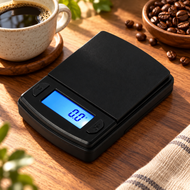
Selected pocket scales may suit small dry-coffee portions and portable demonstrations when the full load fits.
Check that the intended dosing cup sits securely and leaves the display visible. Evaluate whether the compact format improves the workflow enough to justify another model.
Contained Loads
Consider bowl scales where a container-style format helps with preparation or transfer.
Confirm usable bowl volume, cleaning instructions and suitability for the intended food-contact application. Include the bowl’s mass in capacity calculations.
Larger Production Loads
Compare bench scales for heavier containers and batch preparation.
Check capacity and platform dimensions against your actual equipment. Large sacks or bins may require a different instrument beyond the range of a particular model.
Standardize models where practical, provided they meet every assigned task.
Calculate the Complete Working Load
Tare changes the displayed value. It does not remove the container’s physical load.
For example, a hypothetical brewing setup might include:
| Component | Mass |
|---|---|
| Server and dripper | 700g |
| Filter and dry coffee | 40g |
| Water added | 900g |
| Combined load | 1,640g |
The scale must accommodate the maximum combined load reached during the process.
For production equipment, weigh the empty container instead of estimating its contribution. Leave headroom for normal variation and future vessel changes.
Also check physical fit. A container touching another surface can interfere with weighing even when the load is within capacity.
Match Readability to the Task
A 0.1g specification describes tenths-of-a-gram display increments. A 1g specification describes whole-gram increments.
The NIST mass-units reference provides background on grams, kilograms and related metric units. Use consistent units in specifications and purchasing records.
Choose readability alongside verified performance. More decimal places do not independently establish better accuracy or repeatability.
Small-dose preparation and larger batch work may need different equipment. Define acceptable measurement variation before evaluating samples.
Set Operational Quantities From Simultaneous Use
Count the stations that need equipment at the same time.
For a hypothetical small operation, the requirement might be:
| Operational role | Illustrative quantity |
|---|---|
| Brewing stations | 2 |
| Sample preparation | 1 |
| Batch preparation | 1 |
| Demonstration area | 1 |
| Checked backup for a critical station | 1 |
This is a planning illustration, not an industry benchmark.
Review whether the proposed backup genuinely meets the critical station’s requirements. A smaller spare cannot substitute for production equipment if its capacity is insufficient.
For multiple locations, record quantities by site and establish who receives, checks and maintains each unit.
Forecast Retail Quantities Separately
Use sales history by model when available.
Review periods when the product was in stock. Low sales during a stockout do not establish low demand.
For a new retail category, start with a focused assortment and a manageable test quantity. Prioritize one core model, then add an alternative only where it serves a distinct need.
Consider:
-
Customer questions about brewing equipment.
-
Existing accessory sales.
-
Class attendance.
-
Available display space.
-
Expected replenishment lead time.
-
Cash available for inventory.
Avoid buying equal quantities of every model simply to create visual variety.
Use Reorder Points and Inventory Position
A reorder point helps determine when to replenish:
Reorder point = expected demand during lead time + safety stock
Suppose a hypothetical retail model sells four units weekly, replenishment takes two weeks and safety stock is four units.
The reorder point is:
4 × 2 + 4 = 12 units
For periodic ordering, target stock should cover demand during the review interval plus lead time, with safety stock added.
Calculate:
Order quantity = target stock − inventory position
Inventory position is usable stock on hand plus confirmed inbound units, minus committed units.
If target stock is 20 units and inventory position is nine, the calculated order is 11 units. Review case multiples, budget and expected changes in demand before finalizing.
Evaluate Samples Before Scaling the Order
Test representative products in the intended environment.
Use suitable reference weights near working loads, repeat measurements and check zero return after unloading. Compare observations with your acceptance criteria.
NIST’s calibration overview explains relating instrument response to reference standards. Follow the exact model’s instructions for any adjustment routine.
Then run the actual workflow:
-
Dose coffee into the intended cup.
-
Test display visibility with the brewing vessel.
-
Observe response during additions.
-
Check shutoff during normal pauses.
-
Evaluate loading and unloading.
-
Review cleaning and storage.
Document the approved model and sample. Establish a process for approving substitutions or specification changes.
Plan Accessories and Reference Equipment
Review weighing scale accessories and confirm current availability and compatibility.
Check which batteries, adapters or weights are included before adding separate quantities.
Specify reference-weight requirements when measurement checks need documented evidence. A nominal mass marking does not automatically establish traceability.
NIST’s metrological traceability guidance explains the documented calibration chain linking measurement results to a reference.
Include suitable storage and handling arrangements for reference equipment in your operating plan.
Verify Packaging and Commercial Applications
Treat scales used for transactions by weight or packaged-quantity checks as a separate equipment decision.
The NIST weighing and scales FAQs provide background on commercial weighing requirements. Fine readability and a calibration function do not establish legal-for-trade suitability. Verify the exact equipment and applicable requirements for your use.
For packaged coffee, establish how net contents are checked and how packaging tare and variation are handled.
NIST’s packaging and labeling resources provide background on package quantity and labeling practices. Select equipment alongside the appropriate procedure.
Compare Quotes Using Delivered Cost
Request the same details from each supplier.
| Quote item | What to confirm |
|---|---|
| Product | Exact SKU and specifications |
| Quantity | Units by model and case multiples |
| Pricing | Applicable unit price and volume conditions |
| Availability | Stock status and allocation |
| Delivery | Freight charges and estimated timing |
| Payment | Agreed payment schedule |
| Contents | Included accessories and instructions |
| Remedies | Defect, shortage and return process |
Ask whether mixed models count toward volume pricing.
Consider a hypothetical comparison:
| Cost element | Smaller order | Larger order |
|---|---|---|
| Units | 40 | 80 |
| Product cost per unit | $15 | $14 |
| Freight | $60 | $80 |
| Total delivered cost | $660 | $1,200 |
| Delivered cost per unit | $16.50 | $15.00 |
The larger order reduces delivered unit cost by $1.50 but requires $540 more upfront.
Evaluate whether the additional inventory will be used or sold within an acceptable period. Include selling fees, returns and support when assessing retail contribution.
Inspect and Deploy Incoming Equipment
Prepare a receiving procedure before delivery.
Count units, confirm SKUs, inspect packaging and record damage. Check contents and perform the agreed functional and performance evaluation.
Separate questionable units from saleable or operational stock until resolved. Retain relevant receipt dates and lot or serial identifiers.
For operational equipment, record its assigned location and responsible employee. Provide the correct instructions before deployment.
Set ongoing reference checks according to use and risk. NIST’s guidance on controlling calibration results discusses monitoring short-term and long-term measurement variation.
Frequently Asked Questions
How many scales should a roastery order?
Count simultaneous operational needs separately from retail demand, demonstration units and justified backups.
Should all stations use the same model?
Standardize where the model meets each task’s capacity, performance and handling requirements.
Can several models qualify for one volume discount?
Confirm the supplier’s terms. Mixed-SKU eligibility should be established before finalizing quantities.
Does tare increase available capacity?
No. The container remains part of the physical load.
Is the lowest unit price the best offer?
Compare delivered cost, suitability, support and expected inventory use. A lower price can create excess stock if quantities exceed demand.
Prepare Your Bulk Coffee Scale Order
Build a purchasing sheet with exact models, quantities, working requirements, delivery dates and acceptance criteria. Evaluate samples and use inventory data to plan replenishment.
Contact American Weigh Wholesale to discuss current availability, volume pricing and ordering terms. The site advertises volume pricing and reseller support; confirm the conditions for your proposed order.