
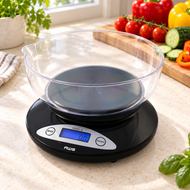
Custom-Branded Digital Scales for Corporate and Retail Programs
Published by AWS Team on 30th Sep 2026
Custom-branded digital scales combine practical everyday utility with long-term brand visibility. Unlike disposable promotional products, a well-chosen scale can remain in a customer’s kitchen, bathroom, office, workshop, store or travel bag for years.
That makes digital scales potentially useful for:
-
Corporate wellness programs
-
Employee appreciation gifts
-
Retail private-label programs
-
Loyalty rewards
-
Customer onboarding kits
-
Health and fitness campaigns
-
Food and nutrition promotions
-
Travel programs
-
Specialty-store merchandise
-
Distributor catalogs
-
Subscription boxes
-
Event gifts
-
Influencer and media mailers
The scale itself, however, is only one part of the program. A successful custom-branded order requires the right product category, accurate specifications, durable branding, appropriate packaging, realistic lead times and a distribution plan.
Businesses exploring bulk scale options can begin with the current product categories available through American Weigh Wholesale.
What Is a Custom-Branded Digital Scale?
A custom-branded digital scale is a weighing device customized with a company’s name, logo, campaign message, color palette or packaging.
Customization can range from a simple one-color logo to a complete retail program involving:
-
Branded scale housing
-
Custom color
-
Printed gift box
-
Campaign-specific packaging sleeve
-
Branded instruction manual
-
Custom product name
-
Retail barcode
-
Promotional insert
-
QR code
-
Warranty card
-
Gift note
-
Coordinated accessories
-
Master-carton labeling
-
Direct-to-recipient fulfillment
The correct level of customization depends on the program’s purpose.
A corporate wellness campaign may need a recognizable logo, attractive presentation and a message card. A retail program requires more extensive product information, inventory identifiers, sales packaging, customer support and compliance documentation.
Corporate Programs and Retail Programs Are Different
Although both programs may use branded scales, they have different goals.
| Program type | Primary goal | Typical recipient | Key priorities |
|---|---|---|---|
| Corporate gift | Appreciation and brand recognition | Employees, clients or partners | Presentation, usefulness and delivery |
| Wellness program | Encourage healthy routines | Employees or members | Ease of use, privacy and educational messaging |
| Promotional campaign | Increase awareness or participation | Customers and prospects | Logo visibility and campaign relevance |
| Loyalty reward | Retention and engagement | Existing customers | Perceived value and reliable fulfillment |
| Retail program | Generate sales and profit | Consumers | Packaging, margin, differentiation and support |
| Distributor program | Supply multiple business buyers | Resellers or corporate buyers | Repeatability, documentation and volume |
| Subscription box | Add themed customer value | Subscribers | Compact packaging, relevance and unboxing appeal |
A corporate-gift buyer may evaluate cost per recipient and presentation quality. A retailer must also calculate gross margin, inventory turnover, return rates and customer-acquisition costs.
Trying to use one undifferentiated plan for both channels can create problems. The box that works in an employee gift kit may not provide enough information for a retail shelf.
Why Digital Scales Work as Branded Products
They provide ongoing visibility
A scale is often stored where it will be used: on a kitchen counter, inside a bathroom, beside a coffee station or in a travel bag. Each use can create another brand impression.
They offer practical value
Useful products generally create stronger goodwill than novelty items with no long-term function. A scale can support cooking, portioning, travel, weighing collectibles or household organization.
Multiple price levels are available
Programs can select compact pocket scales, kitchen scales, bathroom scales, milligram models or hanging scales according to budget and audience.
The product can reinforce a campaign theme
A digital scale can support themes involving:
-
Wellness
-
Nutrition
-
Cooking
-
Fitness
-
Travel
-
Precision
-
Craftsmanship
-
Quality control
-
Organization
-
Healthy habits
-
Small-business tools
The connection should be natural. A kitchen scale makes sense in a nutrition campaign. A luggage scale makes sense for a travel rewards program. An arbitrary product can feel like leftover promotional inventory rather than a thoughtful gift.
Start With the Program Objective
Before selecting a model, define the result the organization wants.
Possible objectives include:
-
Rewarding employees
-
Supporting a voluntary wellness initiative
-
Thanking high-value customers
-
Adding value to a retail brand
-
Creating a premium event giveaway
-
Encouraging product trial
-
Equipping franchise locations
-
Standardizing internal weighing tasks
-
Launching a private-label merchandise line
-
Building a themed gift box
-
Generating repeat wholesale orders
Write the objective in one sentence.
For example:
Provide a useful branded kitchen tool to 1,500 employees during a voluntary nutrition-education campaign.
Or:
Launch a three-model scale assortment for specialty retail stores with clear good-better-best pricing.
That sentence becomes the filter for product, packaging and budget decisions.
Define the Audience
The recipient determines which scale will feel useful.
Ask:
-
Where will recipients use the product?
-
What are they likely to weigh?
-
Are they experienced scale users?
-
Will they understand capacity and readability?
-
Does the scale need to travel?
-
Is the audience broad or specialized?
-
Are there accessibility considerations?
-
Will the product be given to adults only?
-
Is the program domestic or international?
-
Will scales be distributed individually or in kits?
-
Is the scale a gift, retail item or internal business tool?
Avoid choosing a highly specialized milligram scale for a general audience simply because it appears more precise. Specialized products work best when recipients understand why they need them.
Choosing the Right Type of Digital Scale
Pocket scales for compact campaigns
Pocket scales are small, portable and relatively easy to distribute. They can be suitable for:
-
Jewelry retailers
-
Coin dealers
-
Hobby programs
-
Craft brands
-
Collectibles companies
-
Trade-show kits
-
Specialty retail
-
Technical training programs
The wholesale pocket scale collection contains multiple capacities and formats that can serve as starting points for a branded program.
Important selection criteria include:
-
Capacity
-
Readability
-
Cover design
-
Platform dimensions
-
Supported units
-
Battery type
-
Overall size
-
Logo area
-
Packaging dimensions
A protective cover can provide a useful branding surface while protecting the platform during storage.
Milligram scales for specialized audiences
Milligram scales commonly display in 0.001-gram increments. They may be relevant to jewelers, precision hobbyists, fragrance formulators, gemstone customers and other specialized users.
Businesses can compare available sizes and accessories in the wholesale milligram scale category.
These scales require especially careful program communication. “0.001g readability” should not be turned into an unsupported claim of guaranteed accuracy under all conditions.
Environmental factors such as drafts, vibration, temperature and an uneven surface can affect very small measurements.
Kitchen scales for wellness and food programs
Kitchen scales have broad recognition and can be used for:
-
Corporate nutrition initiatives
-
Cooking campaigns
-
Meal-prep programs
-
Culinary gift sets
-
Food-brand promotions
-
Recipe boxes
-
Fitness partnerships
-
Retail kitchen departments
The wholesale kitchen scale selection includes a variety of platform formats, capacities and designs.
For general audiences, prioritize:
-
Simple controls
-
Clear display
-
Easy-to-clean platform
-
Tare function
-
Gram and ounce modes
-
Adequate capacity
-
Readable instructions
-
Stable feet
-
Practical battery type
A kitchen scale can be paired with a recipe card, nutrition guide, meal-prep container or branded kitchen accessory when the additional items support the program’s message.
Bathroom scales for employee and consumer wellness
Bathroom scales offer a large branding presence and high perceived value, but they require more storage and shipping space than pocket or kitchen scales.
The wholesale bathroom scale range includes models with different capacities, platforms and feature sets.
Consider:
-
Maximum capacity
-
Display size
-
Platform stability
-
Surface material
-
Carpet compatibility
-
Battery requirements
-
Packaging protection
-
Individual shipping cost
-
Privacy of program messaging
Corporate wellness programs should avoid language that could shame employees or pressure them to disclose personal health information. Participation should be handled thoughtfully, and the accompanying message should emphasize voluntary personal use rather than employer monitoring.
Hanging and luggage scales for travel programs
A hanging scale can align naturally with:
-
Airline promotions
-
Travel agencies
-
Hotels
-
Tour operators
-
Corporate travel departments
-
Luggage brands
-
Employee travel kits
-
Customer loyalty rewards
The wholesale hanging scale collection includes digital luggage scales and higher-capacity hanging formats.
For travel-focused gifting, evaluate:
-
Maximum luggage capacity
-
Strap or hook design
-
Handle comfort
-
Display visibility
-
Weight-hold feature
-
Unit selection
-
Battery availability
-
Packability
The product should be tested with realistic luggage rather than evaluated only on a desk.
Bench scales for operational programs
Bench scales are designed for stable placement on a workstation and can support warehouses, production rooms, shipping departments and internal quality processes.
The current wholesale bench scale category can help business buyers compare heavier-duty formats.
Internal operational programs may prioritize:
-
Platform size
-
Display location
-
Power supply
-
Capacity
-
Cleaning requirements
-
Repeated-use durability
-
Calibration procedures
-
Documentation
-
Consistent replacement models
A branded internal-use scale can reinforce company identity, but its functional suitability is more important than the promotional appearance.
Capacity and Readability: The Two Core Specifications
Every scale program should explain capacity and readability correctly.
Capacity
Capacity is the maximum total load the scale is designed to handle.
A scale listed as 5kg x 1g can weigh up to 5 kilograms. That total includes any bowl or container.
Readability
Readability is the smallest increment the display shows.
The same 5kg x 1g scale displays changes in 1-gram increments.
Examples
| Specification | Meaning | Potential application |
|---|---|---|
| 20g x 0.001g | Up to 20g; displays 0.001g increments | Specialized precision weighing |
| 500g x 0.01g | Up to 500g; displays 0.01g increments | Jewelry, crafts or small items |
| 5kg x 1g | Up to 5kg; displays 1g increments | Cooking and meal preparation |
| 50kg x 0.05kg | Up to 50kg; displays 50g increments | Travel luggage |
| 400lb x 0.2lb | Up to 400lb; displays 0.2lb increments | Personal body weight |
These are general examples, not promises about a specific model.
Higher capacity and finer readability are not interchangeable. The audience must have enough capacity for the entire load and enough readability for the task.
Building the Customization Brief
A written customization brief prevents misunderstandings and allows suppliers to produce a more accurate quote.
Include the following.
Program information
-
Organization
-
Campaign or retail program name
-
Intended use
-
Target audience
-
Distribution date
-
Destination
-
Total quantity
-
Expected repeat orders
Product requirements
-
Scale category
-
Capacity
-
Readability
-
Required units
-
Platform size
-
Product dimensions
-
Power source
-
Preferred color
-
Required functions
-
Included accessories
Branding requirements
-
Logo file
-
Logo colors
-
Placement
-
Maximum and minimum logo size
-
Printing method
-
Campaign message
-
Required trademarks
-
Prohibited alterations
-
Approval contacts
Packaging requirements
-
Standard box or custom box
-
Gift sleeve
-
Insert card
-
Individual mailing box
-
Retail barcode
-
Model number
-
Country-of-origin marking
-
Instruction manual
-
Warranty information
-
Master-carton labels
Logistics requirements
-
Delivery deadline
-
Delivery locations
-
Split shipments
-
Pallet requirements
-
Individual fulfillment
-
Recipient-data process
-
Tracking requirements
-
Storage plan
-
Reorder expectations
Classify each requirement as mandatory, preferred or optional. This helps the supplier recommend cost-saving alternatives without eliminating essential features.
Choosing the Branding Method
The scale’s material, shape and expected use determine which branding methods are practical.
Pad printing
Pad printing can apply a logo to small or curved surfaces. It is common for compact plastic products.
Advantages may include:
-
Clean appearance
-
Good fit for small logos
-
Efficient production at volume
-
One- or multi-color possibilities
The final result depends on surface material, ink, color contrast and artwork complexity.
Screen printing
Screen printing can work well on larger flat surfaces or packaging. It may support bold graphics but can be less suitable for highly detailed artwork on a very small area.
Laser engraving
Laser engraving can create a durable, understated mark on compatible metal or coated surfaces.
It may suit:
-
Executive gifts
-
Premium retail products
-
Technical programs
-
Minimalist branding
The available contrast depends on the material and finish.
Printed label
A high-quality label can work for limited quantities, short-term campaigns or packaging customization. The adhesive and finish should be tested for:
-
Peeling
-
Temperature changes
-
Humidity
-
Cleaning
-
Abrasion
-
Long-term storage
A poorly applied sticker can make an otherwise strong product feel inexpensive.
Custom packaging
In many programs, the packaging offers more design freedom than the scale.
A standard scale paired with a polished sleeve, insert or gift box may create a more impressive result than forcing a large logo onto a small product surface.
Custom housing
Changing the molded housing or product color can create stronger differentiation but may require larger quantities, longer production time and additional setup.
Ask whether the requested color affects:
-
Minimum order quantity
-
Unit cost
-
Lead time
-
Sample approval
-
Color consistency
-
Replacement inventory
Protect the Brand Identity
Before production, confirm that the company has authority to use every name, logo, slogan, photograph and certification mark appearing on the product or packaging.
The United States Patent and Trademark Office explains that trademarks identify and distinguish the source of goods or services. Its trademark basics guidance can help program owners understand how trademarks differ from patents, copyrights and business-name registrations.
Provide suppliers with:
-
Vector logo files
-
Pantone or other approved color references
-
Clear-space rules
-
Minimum logo size
-
Approved background colors
-
Trademark-symbol requirements
-
Prohibited distortions
-
Written approval workflow
Never approve logo placement solely from a digital mockup. Request a physical preproduction sample whenever feasible.
Design Corporate Packaging Around the Experience
Corporate packaging should make the product feel intentional.
Employee gift presentation
A corporate kit may include:
-
Branded digital scale
-
Welcome card
-
Quick-start instructions
-
Program information
-
Optional complementary item
-
Support contact
-
Privacy-conscious wellness language
The outside of the parcel should protect the gift without disclosing sensitive campaign information unnecessarily.
Client appreciation presentation
Premium client packaging may use:
-
Minimal branding
-
High-quality insert
-
Personalized note
-
Protective fitted interior
-
Executive-style color palette
-
QR code leading to a thank-you page
Avoid overwhelming a useful gift with sales language.
Event packaging
Event programs need:
-
Compact cartons
-
Easy handout
-
Clear quantity per case
-
Durable handles or tote compatibility
-
Fast booth replenishment
-
Scannable inventory labels
-
Simple unpacking
Large bathroom-scale boxes may be inconvenient for attendees who must carry them all day. A compact kitchen, pocket or luggage scale may be more practical.
Design Retail Packaging to Sell
Retail packaging has different responsibilities.
It must communicate:
-
Product type
-
Capacity
-
Readability
-
Main use
-
Included accessories
-
Power requirements
-
Supported units
-
Model number
-
Barcode
-
Warranty
-
Customer-support information
Front-panel hierarchy
A simple hierarchy might be:
-
Brand
-
Product name
-
Product image
-
Capacity and readability
-
Primary benefit
Do not make the customer search for the scale’s capacity.
Back-panel content
The back panel can explain:
-
Tare function
-
Unit conversion
-
Platform size
-
Auto-off
-
Included batteries
-
Calibration process
-
Care instructions
-
Operating limitations
-
Package contents
Keep marketing statements consistent with the verified product specification.
Barcodes and Inventory Control
Corporate buyers may need internal asset numbers, while retailers typically need consumer-facing product identifiers.
Create a consistent system for:
-
Product model
-
Color
-
Capacity
-
Pack quantity
-
Campaign version
-
Retail unit
-
Inner pack
-
Master carton
GS1 US explains that barcodes help identify products, record sales and support inventory management. Review its barcoding basics when planning retail identifiers.
A different product variation may require a different identifier when it is ordered, stocked or sold separately.
Test barcode artwork on the actual printed package. A code can look correct in a PDF but fail because of low contrast, incorrect sizing, reflective coating or insufficient blank space.
Samples and Approval Stages
A disciplined approval process reduces expensive surprises.
Unbranded product sample
Use the first sample to evaluate:
-
Capacity
-
Readability
-
Platform size
-
Stability
-
Display
-
Buttons
-
Power
-
Accessories
-
General construction
Do not focus on branding until the underlying product is acceptable.
Branded preproduction sample
The branded sample should show:
-
Logo position
-
Logo size
-
Color
-
Print quality
-
Product finish
-
Packaging
-
Instructions
-
Accessories
Golden sample
The golden sample is the final approved physical reference for production.
Record:
-
Exact model
-
Version
-
Branding
-
Color
-
Accessories
-
Packaging
-
Manual
-
Date approved
-
Approving parties
Production should be inspected against this sample and the written specification.
Quality-Control Testing
At minimum, the program should establish checks for:
-
Product quantity
-
Correct model
-
Correct capacity and readability
-
Power-on operation
-
Display segments
-
Tare function
-
Unit conversion
-
Calibration procedure
-
Repeat weighing
-
Button operation
-
Battery compartment
-
Cosmetic condition
-
Logo alignment
-
Packaging accuracy
-
Accessory count
-
Barcode scanning
-
Carton labeling
Repeatability check
Place the same stable test object on the scale several times, removing it between measurements. Record the readings and compare them with the approved inspection criteria.
Packaging review
Confirm that:
-
The correct model is inside the box
-
The manual matches the controls
-
Batteries are included when promised
-
Accessories match the contents list
-
The product is secured
-
The display and platform are protected
-
The barcode scans
-
The carton survives ordinary handling
A strong scale inside weak packaging can still create a failed program.
Product Safety and Program Responsibility
Corporate and retail buyers should identify applicable product-safety responsibilities before placing a branded order.
The U.S. Consumer Product Safety Commission provides guidance for manufacturers, importers, distributors and retailers. Its business and manufacturing resources explain that covered products must comply with applicable consumer-product requirements.
Maintain a program file containing:
-
Supplier information
-
Factory information
-
Product specifications
-
Purchase orders
-
Test reports
-
Certificates
-
Approved artwork
-
Inspection results
-
Production lot information
-
Distribution records
-
Customer complaints
-
Corrective actions
Battery considerations
Identify:
-
Battery chemistry
-
Whether batteries are included
-
Replacement-battery type
-
Rechargeable-battery documentation
-
Charging equipment
-
Storage requirements
-
Shipping restrictions
-
Disposal information
A scale containing rechargeable lithium-ion batteries may have different shipping considerations from one powered by replaceable AAA batteries.
Recall preparedness
Even a promotional product may require investigation or corrective action if a safety issue is identified.
Keep enough traceability to determine:
-
Which production lot was affected
-
Where it was distributed
-
Which recipients or retailers received it
-
How remaining stock can be stopped
-
How customers can be notified
-
Whether refunds or replacements are available
Legal-for-Trade Limitations
A branded scale used as a customer gift is different from a scale used to determine the price in a commercial sale.
When weight determines the price charged, the device may be subject to legal-metrology requirements.
NIST explains that legal-metrology devices include scales used in regulated commercial applications. Review NIST’s explanation of legal-metrology devices and consult the relevant state or local weights-and-measures authority before promoting a scale for commercial transactions.
A custom logo, calibration function or precise display does not make an ordinary scale legal for trade.
Do not place “legal for trade,” “commercially certified” or similar language on packaging without verification for the exact model and configuration.
Advertising Claims for Branded Scales
Custom branding gives the program owner control over product claims—and responsibility for making sure those claims are accurate.
The Federal Trade Commission advises businesses that advertising must be truthful, nondeceptive and supported by evidence. Its Advertising FAQs for small businesses address claims, disclosures, warranties and online marketing.
Use precise language
Prefer:
-
“5kg maximum capacity”
-
“Displays in 1g increments”
-
“Includes tare function”
-
“Runs on two AAA batteries”
-
“Designed for personal kitchen use”
-
“Includes protective cover”
Avoid unsupported claims such as:
-
“100% accurate”
-
“Medical grade”
-
“Clinically proven”
-
“Professional laboratory scale”
-
“Legal for trade”
-
“Indestructible”
-
“Waterproof”
Make limitations visible
If a claim requires qualification, the qualification should be clear and close to the claim. Do not hide important limitations in small print or an unrelated part of the package.
Warranty Planning
Decide before launch:
-
Who provides customer support
-
Warranty duration
-
What the warranty covers
-
What it excludes
-
Whether proof of purchase is needed
-
Who pays return shipping
-
Whether defective units are replaced or refunded
-
How corporate recipients obtain help
-
How retailers submit claims
-
How replacement inventory is reserved
The FTC’s Businessperson’s Guide to Federal Warranty Law provides an overview of federal warranty principles for consumer products.
Corporate programs should not assume that recipients will contact the original manufacturer. Put a clear support route in the packaging or instructions.
Budgeting for a Custom-Branded Scale Program
The scale’s unit price is only part of the budget.
Include:
-
Product cost
-
Logo setup
-
Printing or engraving
-
Custom color
-
Packaging
-
Insert cards
-
Manuals
-
Samples
-
Testing
-
Inspection
-
Freight
-
Duties
-
Warehousing
-
Individual fulfillment
-
Address validation
-
Postage
-
Replacement units
-
Customer support
-
Returns
-
Rush charges
Example corporate-program budget
| Cost component | Estimated cost per unit |
|---|---|
| Digital scale | $16.00 |
| Logo application | $0.80 |
| Branded sleeve | $1.20 |
| Insert card | $0.30 |
| Inspection allocation | $0.40 |
| Bulk freight and receiving | $1.80 |
| Individual fulfillment | $3.50 |
| Postage | $8.00 |
| Estimated delivered cost | $32.00 |
This example is illustrative only. Actual cost depends on the product, quantity, location and shipping method.
A program described internally as a “$16 gift” may really cost $32 per recipient after presentation and delivery. Calculate the complete delivered cost before approving the campaign.
Retail Margin Planning
Retail programs should calculate landed cost and gross margin separately.
Gross profit = Retail price − Landed cost
Gross margin percentage = Gross profit ÷ Retail price × 100
If the landed cost is $18 and the scale sells for $39.99:
-
Gross profit: $21.99
-
Gross margin: approximately 55%
That figure does not yet account for:
-
Payment processing
-
Marketplace commissions
-
Pick-and-pack fees
-
Advertising
-
Returns
-
Discounts
-
Customer support
-
Overhead
A product with a strong initial margin can become unprofitable if it has a high return rate or requires expensive customer acquisition.
Quantity and Volume Planning
Larger orders may reduce unit cost, but they also increase inventory exposure.
American Weigh Wholesale currently advertises volume discounts at several quantity levels, including discounts for orders from 50 pieces through 1,600 or more pieces. Current eligibility, pricing, product availability, freight and any custom-packaging terms should be confirmed when requesting a quote because promotional programs can change.
Corporate quantity planning
Order enough units for:
-
Confirmed recipients
-
Late additions
-
Shipping damage
-
Address problems
-
Executive requests
-
Customer-service replacements
-
Archived samples
Avoid excessive overage unless the product will remain useful for future programs.
Retail quantity planning
Estimate:
-
Units per store
-
Number of stores
-
Online-launch stock
-
Safety stock
-
Demonstration units
-
Damaged-unit allowance
-
Replenishment lead time
-
Expected monthly sales
A useful formula is:
Months of supply = Available units ÷ Expected monthly sales
If 1,200 units are available and expected sales are 150 per month, the program begins with eight months of inventory.
Fulfillment Options
Bulk delivery to one location
Best for:
-
Conferences
-
Central warehouses
-
Large offices
-
Distributor programs
-
Retail distribution centers
Advantages include simpler freight and receiving.
Split delivery
Products are divided among offices, stores or regional warehouses.
The purchase order should specify:
-
Quantity by location
-
Delivery window
-
Contact information
-
Pallet or parcel preference
-
Labeling requirements
Individual recipient fulfillment
Direct shipping can support remote employees, loyalty members and client gifts.
It also requires:
-
Secure address handling
-
Address validation
-
Privacy controls
-
Individual packaging
-
Tracking
-
Undeliverable-mail process
-
Replacement policy
-
International-shipping review
Personal recipient data should be shared only with parties that need it for fulfillment and handled according to the organization’s privacy requirements.
Creating an Effective Corporate Insert
The insert should explain why the recipient received the scale.
A kitchen-scale insert might include:
-
Brief thank-you
-
Campaign purpose
-
Three setup steps
-
Tare explanation
-
QR code to recipes
-
Support contact
A luggage-scale insert could include:
-
Travel message
-
Unit-selection instructions
-
Reminder to check current airline limits
-
QR code to a travel-resource page
Keep the message useful and concise. Recipients are more likely to save a practical reference than a page of corporate slogans.
Launching a Retail Scale Program
Start with a focused assortment
A practical initial collection might include:
-
Compact pocket scale
-
General kitchen scale
-
Precision milligram scale
-
Luggage scale
Each model should address a distinct customer.
Build comparison content
Compare:
-
Capacity
-
Readability
-
Platform or hook design
-
Units
-
Power
-
Dimensions
-
Included accessories
-
Recommended use
Train sales staff
Staff should know how to ask:
-
What are you weighing?
-
What is the heaviest total load?
-
How small a change do you need to see?
-
Will you use a container?
-
Which units do you need?
-
Will the scale travel?
-
Is the scale for personal or commercial use?
Launch with education
Useful content includes:
-
How tare works
-
Capacity versus readability
-
How to calibrate a scale
-
Why a level surface matters
-
How to protect the load cell
-
How to select a scale for a particular application
Educational merchandising can reduce price-only comparisons and prevent returns caused by choosing the wrong model.
Measuring Program Performance
Corporate programs
Measure:
-
Delivery completion
-
Damage rate
-
Replacement requests
-
Employee or recipient feedback
-
QR-code engagement
-
Program participation
-
Support questions
-
Cost per delivered gift
-
Satisfaction
-
Future-use intent
Avoid treating body-weight changes or other sensitive personal information as ordinary promotional metrics.
Retail programs
Track:
-
Units sold
-
Revenue
-
Gross margin
-
Contribution margin
-
Inventory turnover
-
Weeks of supply
-
Return rate
-
Defect rate
-
Review score
-
Conversion rate
-
Reorder frequency
-
Gross profit by model
-
Attach rate for accessories
Distributor programs
Measure:
-
Quote-to-order rate
-
Repeat orders
-
Average order size
-
Lead-time performance
-
Artwork revision count
-
On-time delivery
-
Complaint rate
-
Customer retention
Common Mistakes to Avoid
Selecting the gift before defining the audience
A scale must connect naturally to the recipient and program.
Choosing based only on price
The least expensive model may create higher costs through returns, weak packaging or poor recipient response.
Treating all scales as interchangeable
Capacity, readability, platform size and intended use can differ substantially.
Using an oversized logo
A large logo can make the product feel like an advertisement rather than a useful gift. Subtle branding often produces a more premium result.
Approving only a digital mockup
A physical branded sample reveals color, placement and print-quality issues that may not appear on screen.
Missing the delivery deadline
Work backward from the required arrival date and include time for samples, artwork, production, inspection and freight.
Ignoring individual shipping costs
For corporate programs, postage can exceed the cost of customization.
Making unsupported health claims
A digital scale can support personal routines, but it should not be marketed as diagnosing, preventing or treating medical conditions without appropriate substantiation and authorization.
Assuming a precise display means legal-for-trade approval
Commercial approval must be verified separately.
Failing to reserve replacement units
Keep a reasonable quantity for damage, loss, defects and customer service.
Custom-Branded Scale Program Checklist
Strategy
-
Program objective defined
-
Audience identified
-
Corporate, retail or distributor channel confirmed
-
Budget approved
-
Delivery date established
-
Success metrics selected
Product
-
Correct scale category
-
Capacity confirmed
-
Readability confirmed
-
Platform size reviewed
-
Units confirmed
-
Power source confirmed
-
Accessories confirmed
-
Intended use documented
Branding
-
Trademark authorization confirmed
-
Vector logo supplied
-
Brand colors specified
-
Logo placement approved
-
Physical branded sample approved
-
Campaign message proofread
Packaging
-
Product protection tested
-
Box or sleeve approved
-
Insert approved
-
Instructions verified
-
Barcode tested
-
Model number correct
-
Warranty information included
-
Required markings reviewed
Quality and compliance
-
Supplier information documented
-
Applicable requirements identified
-
Test documents collected
-
Golden sample retained
-
Inspection criteria agreed
-
Production lot traceable
-
Complaint process established
-
Recall plan available
Financial and logistics
-
Total landed cost calculated
-
Total delivered cost calculated
-
Retail margin calculated
-
Shipping method selected
-
Delivery locations confirmed
-
Replacement inventory reserved
-
Reorder timing established
-
Recipient-data process reviewed
Frequently Asked Questions
What types of scales can be custom branded?
Pocket, milligram, kitchen, bowl, bathroom, hanging and other digital scales may be candidates. Availability depends on the supplier, model, quantity and branding method.
What is the best branded scale for a corporate wellness program?
A simple kitchen or bathroom scale may suit a broad audience, depending on the campaign. Kitchen scales can offer a less personal, food-focused option, while bathroom scales require especially thoughtful and voluntary wellness messaging.
Are luggage scales good corporate gifts?
They can be excellent for employees or clients who travel. Their compact size also makes them easier to distribute than large bathroom scales.
How many colors can a logo include?
The answer depends on the printing method, product surface and order size. Simplifying a multi-color logo to one or two colors may reduce cost and improve clarity on small products.
Can each scale be personalized with a recipient’s name?
Individual personalization may be possible through engraving, labels or packaging, but it can add cost and fulfillment complexity. Confirm file format, proofing and error-handling requirements.
What is the difference between branded and private-label scales?
A branded promotional scale may retain the original manufacturer’s identity while displaying a corporate logo. A private-label product is generally sold under the buyer’s own brand with more complete control over retail presentation.
How far in advance should a custom program begin?
Begin early enough to allow for selection, samples, artwork, testing, production, inspection and shipping. Greater customization and international freight generally require more time.
Can the scale be described as perfectly accurate?
No scale should be promoted with unsupported absolute claims. State the verified capacity, readability and other documented performance information.
Can a custom-branded scale be used to charge customers by weight?
Only if the exact device is suitable and approved for the applicable commercial use. Confirm legal-for-trade requirements with the relevant authority.
Should a business order extra units?
Yes. A modest overage can cover samples, damage, shipping loss, late recipients and warranty replacements. Calculate overage from program risk rather than adding an arbitrary large amount.
Final Thoughts
Custom-branded digital scales can work across corporate gifting, wellness, travel, loyalty and retail programs because they provide practical value and repeated brand exposure.
The strongest programs begin with the audience and intended use—not the logo.
Choose a scale with the right capacity, readability, platform, power source and form factor. Then select a branding method that complements the product rather than overwhelming it.
Before production:
-
Define the objective.
-
Choose the audience.
-
Select the scale category.
-
Document the specifications.
-
Test an unbranded sample.
-
Approve a physical branded sample.
-
Verify packaging and instructions.
-
Review safety and marketing obligations.
-
Calculate the complete delivered cost.
-
Inspect production before distribution.
For retail programs, add margin planning, barcode management, merchandising and inventory control. For corporate programs, place greater emphasis on presentation, recipient experience, privacy and delivery logistics.
A custom-branded scale should feel like a useful product that happens to carry the organization’s identity—not an advertisement that happens to weigh something. When the product, branding and program purpose align, the scale can continue reinforcing the brand long after the original campaign ends.