
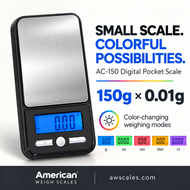
How Coin Dealers Can Merchandise Digital Scales for Better Sell-Through
Published by AWS Team on 19th Oct 2026
Coin dealers can make digital scales easier to shop by displaying them near relevant collecting supplies, explaining the differences between models and offering a short demonstration.
A sealed box with a model number gives customers little reason to stop. A working display that explains capacity, readability and available units helps them understand whether a scale suits their collection.
Effective merchandising connects the product to a specific task. Individual coins, grouped lots and heavier containers create different weighing requirements. Customers should be able to recognize those differences without studying several instruction manuals.
The following approach gives coin dealers a practical way to organize displays, train staff and measure results.
Give Every Displayed Scale a Clear Purpose
Start with a small selection in which each model has a distinct role.
For many stores, that means a portable option, a capacity upgrade and a finer-readability option when customer demand supports it.
| Display role | Customer need | Information to emphasize |
|---|---|---|
| Portable pocket scale | Individual coins and small groups | Capacity, readability and protective cover |
| Higher-capacity model | Heavier groups and containers | Full-load limit and platform size |
| Fine-readability model | Smaller displayed increments | Readability and operating requirements |
| Larger platform model | More room for grouped loads | Platform dimensions and suitable working loads |
Compare wholesale pocket scales to identify a core model that staff can demonstrate confidently.
Avoid filling a small display with nearly identical products. If two models share the same capacity and readability, explain their other meaningful differences, such as platform design, power source or listed units.
A clear reason to choose each model makes the assortment easier to understand.
Place Scales Near Relevant Collecting Supplies
Position scales where customers already consider tools for examining and organizing coins.
Possible locations include:
-
Beside magnifiers and measuring tools.
-
Near coin flips, capsules and storage supplies.
-
Within a collector-accessories section.
-
On a dedicated demonstration surface near the counter.
Keep the products visible without crowding valuable inventory or interrupting staff workflows.
Use a shelf sign that states the purpose plainly:
Digital scales for coin weighing: compare capacity, readability and units.
This is more informative than a sign that simply says “precision equipment.”
For coin shows, use a compact display with one demonstration unit and clearly labeled packaged stock. Protect the demonstration platform during transport and set it up according to the manufacturer’s instructions after arrival.
Make Shelf Labels Answer the First Buying Questions
Customers should be able to identify the most important specifications at a glance.
Use the same label structure across the assortment:
| Label field | What to show |
|---|---|
| Capacity | Maximum load in grams |
| Readability | Smallest displayed increment in grams |
| Units | Verified modes for the exact model |
| Platform | Dimensions or a useful size description |
| Included items | Confirmed package contents |
| Price | Clear selling price |
| Intended role | Portable weighing, larger loads or finer increments |
For example, a hypothetical label could read:
Portable collector scale
Capacity: 500g
Readability: 0.01g
Units: See verified model specifications
Remember: Include the container in the total load.
Use actual specifications from the exact SKU you sell. Do not copy details from a similar-looking model.
Explain Readability in Plain Language
A customer may interpret “0.001g” as a guarantee of accuracy. Staff and signage should explain what the number means.
A 0.001g display increment equals 1mg; a 0.01g increment equals 10mg. The NIST mass-units reference provides background on these metric relationships.
Readability describes the display increment. Accuracy and repeatability require separate evaluation.
When displaying milligram scales, emphasize the verified specifications and appropriate setup requirements. Avoid implying that additional decimal places guarantee better results in every situation.
Demonstrate the Buying Decision
A useful demonstration shows customers how a scale fits their task.
Keep the process short:
-
Place the scale on a firm, level surface.
-
Confirm the platform is clean and unobstructed.
-
Turn it on and follow the specified startup procedure.
-
Show the unit symbol.
-
Place a suitable demonstration object on the platform.
-
Explain capacity, tare and normal handling.
Use a store-owned object that can be handled safely. Do not use a valuable customer coin as the default demonstration item.
If you demonstrate tare, explain that the container remains part of the physical load. Zeroing its displayed weight does not restore the capacity it occupies.
A helpful staff explanation is:
“This model displays hundredths of a gram. Your container and coins must fit within its total capacity. We can compare another model if you need more room or smaller display increments.”
That gives the shopper a practical decision without overstating performance.
Keep the Demonstration Unit Ready to Use
A display loses credibility when the scale has weak batteries, residue on the platform or unexplained readings.
Assign responsibility for checking the demonstration area.
| Check | Purpose |
|---|---|
| Battery or power condition | Keep the unit available for demonstrations |
| Clean platform | Prevent residue from affecting use |
| Stable placement | Reduce interference from movement |
| Clear display and unit symbol | Make results easy to read |
| Reference-weight check | Monitor performance |
| Available instructions | Support accurate staff explanations |
Use appropriate reference weights and a defined checking procedure. NIST’s guidance on check standards explains how reference measurements can help monitor measurement performance over time.
Repeatedly weighing an unknown coin can demonstrate consistency, but it does not independently establish accuracy.
Present Larger Scales Through Relevant Use Cases
Larger equipment needs a clear explanation of why a customer might choose it.
Review bench scales for applications involving grouped loads or larger containers. Display the verified capacity and readability together so customers can assess both.
A larger platform can improve handling, but it does not automatically provide finer measurements.
Selected bowl scales may also merit consideration for suitable grouped-material applications. Evaluate the exact model, container and contact surfaces before recommending it.
For collectible coins, handling and surface protection matter. A shared bowl may be inappropriate for items that could be scratched or otherwise damaged.
Keep these larger options in a secondary display or available by request when demand is limited.
Use Educational Signs Without Overpromising
Educational merchandising can explain why weighing is useful while keeping the limitations clear.
A small sign could state:
Coin weight is one part of an examination. Compare the correct issue and use other appropriate checks.
The U.S. Mint’s coin specifications provide official reference information for the circulating coins covered by that resource. Historical issues, different compositions and other coins require matching references.
Do not advertise a general digital scale as a complete counterfeit detector. Mass alone does not establish authenticity, metal purity, grade or value.
Also explain that weighing a slabbed coin measures the coin and holder together. Avoid suggesting that customers remove certified coins solely to obtain a weight.
The FTC’s small-business advertising guidance explains the need for truthful, nondeceptive advertising and support for product claims. Apply that principle to shelf cards, product pages and staff scripts.
Build Bundles Around Compatibility
A useful bundle helps the customer begin using the scale correctly.
Potential components include compatible power accessories, suitable reference weights or protective storage. Review weighing scale accessories and confirm the exact items available for your chosen models.
Before creating a bundle, verify:
-
Electrical compatibility for adapters.
-
The required calibration mass.
-
Reference-weight specifications.
-
What already comes in the box.
-
How accessories affect the final selling price.
A calibration weight is not interchangeable with every other weight of similar appearance. Follow the model’s instructions and the customer’s verification requirements.
Describe the bundle contents individually. If you advertise a saving, ensure the comparison uses genuine, supportable individual selling prices.
Track whether the bundle improves customer convenience and contribution after costs. A larger basket does not necessarily produce a larger profit.
Make Warranty and Return Information Easy to Find
Customers may hesitate when they do not understand what happens if a scale develops a problem.
Give staff a verified reference covering:
| Question | Information staff should confirm |
|---|---|
| Who provides warranty service? | Manufacturer, retailer or another named provider |
| What is covered? | Applicable written terms and exclusions |
| What documents are needed? | Receipt and any required product identification |
| How does a claim begin? | Correct contact or submission process |
| What is the store’s return policy? | Separate retail return terms |
Keep the manufacturer’s warranty, your retail return policy and your supplier’s wholesale terms distinct.
The FTC’s business guide to federal warranty law discusses written consumer warranties and applicable pre-sale availability requirements. Make relevant warranty information accessible before purchase.
Do not promise replacement coverage beyond the terms you can honor.
Keep Commercial Weighing Claims Specific
Some customers want a personal collecting tool. Others may intend to determine a buying or selling price by weight.
Train staff to recognize the difference.
Before recommending equipment for a commercial transaction, confirm the requirements for the intended location and application, including the exact model’s approval status where required.
The NIST weighing and scales FAQs provide background on commercial weighing requirements. Capacity, fine readability and a calibration function do not establish legal-for-trade approval.
Keep your store’s transaction equipment separate from an unattended retail demonstration unit.
Match Online Listings to the In-Store Display
Use the same product names, specifications and intended applications online and in the shop.
Photographs should show the actual model, platform, display and included components. Clearly distinguish optional accessories from items supplied in the package.
An effective product page answers:
-
What is the maximum combined load?
-
What is the readability?
-
Which units are available?
-
What are the platform dimensions?
-
How is it powered?
-
What is included?
-
Where can the customer find instructions and warranty terms?
Consistent information helps shoppers move between your website and physical store without receiving conflicting recommendations.
Measure Sell-Through Before Expanding
Treat merchandising changes as experiments.
Record a baseline, change one major element and review performance over a comparable period.
Useful measures include:
| Measure | What it helps evaluate |
|---|---|
| Units sold by SKU | Which models attract demand |
| Units sold relative to available stock | Inventory movement |
| Sales per relevant customer interaction | Effectiveness of the offer |
| Accessory attachment rate | Bundle relevance |
| Returns and support questions | Fit and explanation quality |
| Contribution after direct costs | Commercial value |
For example, suppose a hypothetical store sells six units from 20 units available during a defined period, with no replenishment. That represents 30% unit sell-through for that stock.
Interpret changes alongside traffic, promotions, stock availability and seasonality. An increase after a display change does not by itself prove the display caused it.
Frequently Asked Questions
Where should a coin dealer display digital scales?
Place them near relevant examination or collecting supplies, with a stable demonstration area and clear access to packaged stock.
How many models should be displayed?
Start with a small selection whose differences are easy to explain. Add models when customer needs and sales results support them.
Should stores offer live demonstrations?
A short, well-prepared demonstration can explain capacity, units and tare. Keep the unit clean, checked and ready to use.
Can scales be promoted as coin authentication tools?
Weighing supports an examination, but mass alone cannot establish authenticity. Avoid claims that imply complete counterfeit detection.
Are bundles always better for sell-through?
No. Test compatible bundles and track sales, returns and contribution. Keep standalone options available for customers who already own accessories.
Create a Clearer Digital Scale Display
Give each model a purpose, make specifications easy to compare and prepare staff to demonstrate normal use. Use sales and return data to refine the assortment over time.
Explore American Weigh Wholesale to compare available categories and discuss current pricing, stock and ordering terms. The site advertises volume pricing and reseller support; confirm the details for your proposed order.