
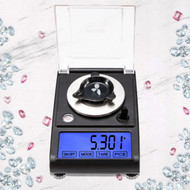
Private-Label Scale Programs for Jewelry Stores
Published by AWS Team on 18th Oct 2026
Private-label scale programs can give jewelry stores a branded accessory to offer customers, provided the product meets a clear weighing need. Depending on the supplier arrangement, customization may include a logo, retail packaging, instructions or an accessory bundle.
The strongest starting point is an established customer requirement. Branding should follow product selection, performance review and a realistic purchasing plan.
For jewelers, distinguish scales offered for resale from equipment used in store transactions, gemstone assessments or controlled workshop procedures. A branded appearance does not establish suitability for any of those applications.
What Does a Private-Label Scale Program Include?
Suppliers use “private label,” “custom branding” and “custom packaging” differently. Define the actual deliverables before comparing proposals.
| Program element | What to confirm |
|---|---|
| Product branding | Logo location and application method |
| Packaging | Custom box, sleeve, label or insert |
| Instructions | Model-specific content and branding |
| Colors | Available options and minimum quantities |
| Accessories | Contents and exact compatibility |
| Identification | Model, SKU and barcode arrangements |
| Documentation | Specifications and any calibration records |
| Support | Warranty, returns and replacement process |
A custom box does not necessarily mean the instrument itself will carry your logo. Neither arrangement automatically includes exclusive rights.
Confirm American Weigh Wholesale’s Available Options
American Weigh Wholesale advertises custom packaging within its volume offerings. The reviewed homepage does not establish on-device branding, a complete private-label program or eligibility for every model.
Request written confirmation of available services for your selected product and quantity.
Choose a Product That Fits Your Customers
Start with how customers will use the scale.
A portable product for components, a finer-reading instrument for appropriately assessed small-item work and a higher-capacity model serve different purposes.
Review wholesale pocket scales as candidate products for portable formats. Confirm customization eligibility individually.
Define the Measurement Requirements
Document:
-
Largest complete load, including the holder.
-
Smallest sample.
-
Required display increment.
-
Acceptable measurement error or uncertainty.
-
Necessary unit modes.
-
Platform and container fit.
-
Power preferences.
-
Required documentation.
For finer display increments, evaluate wholesale milligram scales against the actual task.
A carat setting or fine readability alone does not establish suitability for every gemstone measurement.
Keep Resale Products Separate From Transaction Equipment
A private-label scale sold as a customer accessory has a different role from equipment used to determine a purchase or selling price by weight.
NIST’s weighing and scales FAQs provide background on commercial weighing. Verify applicable requirements and exact model approval before transaction use. Branding, readability and a calibration function do not establish legal-for-trade status.
Also explain that mass does not independently establish metal purity, gemstone quality or authenticity.
Consider Container Handling and Larger Loads
A scale must accommodate the full physical load.
Trays, dishes and holders remain part of that load after tare subtracts their indicated mass from the screen.
For customers who regularly weigh grouped objects, assess wholesale bowl scales. For appropriate larger workbench tasks, compare wholesale bench scales.
Confirm capacity, performance and branding options for the exact product. Do not assume every format can participate in the same program.
Decide How Much Customization You Need
Choose the smallest scope that accomplishes the commercial goal.
| Scope | Potential use | What to clarify |
|---|---|---|
| Custom sleeve or insert | Coordinated store presentation | Fit, print minimums and protection |
| Fully branded box | A consistent retail product | Artwork, identifiers and contents |
| On-device logo | Brand visibility during use | Method, placement and durability |
| Branded accessory bundle | A defined customer solution | Compatibility and packing costs |
| Hardware changes | A requirement unavailable in existing products | Engineering, testing and ownership |
Additional customization can introduce more approvals, minimums and development costs.
Start With One Clear Product Role
Launching several colors and models at once makes demand harder to interpret.
A focused pilot can reveal whether customers value the product and whether staff can support it before the range expands.
Calculate the Complete First-Order Cost
Separate one-time charges from recurring unit costs.
Include samples, artwork, packaging, logo application, freight and any required testing.
Hypothetical Program Budget
| Item | Illustrative cost |
|---|---|
| 200 finished units at $15 each | $3,000 |
| Setup and sample charges | $500 |
| Inbound freight | $200 |
| Total first-order expenditure | $3,700 |
| Average expenditure per unit | $18.50 |
These figures illustrate planning and are not supplier quotes.
At a hypothetical $29.99 selling price, the difference is $11.49 per unit before selling fees, promotions, returns and overhead.
Compare With Standard Branded Stock
Evaluate whether the private-label project offers enough value to justify its commitments.
Compare:
-
Initial cash required.
-
Expected selling price.
-
Total delivered cost.
-
Minimum quantities.
-
Reorder flexibility.
-
Support workload.
-
Unsold packaging risk.
A higher markup is not useful if demand does not support the order.
Clarify Minimums and Reorder Terms
Minimum quantities may apply separately to the scale, logo, color and printed packaging.
Ask whether minimums apply per model, design or production run.
Confirm what happens to unused boxes and inserts. Establish who owns them, where they are stored and whether you must purchase the balance.
For repeat orders, ask whether setup charges recur and whether changes to artwork trigger new fees.
Approve Samples Before Production
Use samples to review the physical product and the finished presentation.
A standard sample can help select the base model. A branded preproduction sample should represent the agreed configuration.
Product Checks
Review exact model identity, units, controls, display visibility, platform fit, power and instructions.
Check performance using suitable reference masses and defined criteria.
NIST’s calibration overview explains the relationship between instrument indications and reference values. Follow the model-specific procedure when checking or adjusting the instrument.
Packaging Checks
Inspect:
-
Logo placement and legibility.
-
Capacity and readability information.
-
Accurate unit modes.
-
Package contents.
-
Barcode scanning.
-
Internal protection.
-
Instructions and support details.
Retain an approved sample and written specification. Agree on how production discrepancies will be evaluated and resolved.
Keep Branding Claims Accurate
Use specific, documented descriptions.
A specification such as “500g × 0.01g” describes capacity and readability. It does not establish accuracy within ±0.01g across the range.
Avoid adding unsupported claims about certification, professional suitability or water resistance.
Verify Brand Ownership
Confirm your right to use the proposed name and artwork.
The USPTO’s trademark overview explains how trademarks identify the source of goods or services. Supplier acceptance of artwork does not establish your right to use the mark.
Define ownership and permitted use of artwork, editable files and any project-specific tools.
Discuss Exclusivity Separately
If exclusivity matters, identify its product, territory, channel and duration.
Specify any purchasing commitments attached to it. A logo on an existing platform does not automatically prevent other businesses from selling the underlying design.
Set Up Product Identification Before Printing
Your packaging, inventory system and supplier records should identify the same finished configuration.
GS1 US’s barcode guidance explains GTINs and UPC product identification. Determine the appropriate arrangements for a newly branded product or bundle before approving packaging.
Test finished samples in receiving and checkout systems.
Maintain a record connecting your branded SKU with the supplier’s underlying model and approved version.
Review Country-of-Origin Statements
Your store’s location and the product’s manufacturing origin are different facts.
Domestic distribution, a local brand name or custom packaging does not automatically support a “Made in USA” claim.
The FTC’s Made in USA guidance explains requirements associated with U.S.-origin marketing claims. Base statements on the actual manufacturing facts.
Plan Accessories and Instructions Together
A useful bundle should solve a defined customer problem.
Review weighing scale accessories and confirm compatibility with the selected model.
Specify whether items are included, separately packed or added by your store. Ensure the instructions match the complete package.
Do not describe a reference weight as certified unless the supplied documentation supports that description.
Define Warranty Responsibilities Before Launch
Customers will associate the product with your jewelry store’s name.
Agree on who handles initial questions, return authorization, inspection, freight and replacement.
The FTC’s business guide to federal warranty law explains relevant U.S. consumer warranty considerations. Obtain written terms and make them available before purchase where required.
Keep store return policies, supplier wholesale terms and consumer warranty coverage distinct.
Prepare Staff to Support the Product
Provide a short reference covering:
-
Specifications and appropriate uses.
-
Unit selection.
-
Container loading and tare.
-
Included items.
-
Calibration instructions.
-
Support procedures.
Staff should know when a customer’s task requires further technical review rather than guessing from the display increment.
Build the Launch Around Confirmed Milestones
| Milestone | Approval needed |
|---|---|
| Product selection | Suitable model and customization eligibility |
| Commercial terms | Quantity, pricing and payment |
| Artwork | Final design and identifiers |
| Sample | Product and packaging acceptance |
| Production | Agreed configuration and schedule |
| Receiving | Quantity, condition and acceptance checks |
| Launch | Inventory ready and staff trained |
Allow time for sample revisions and delivery. An estimated production completion date is different from stock available for sale.
Track sales, profit, returns and support requests before committing to a larger reorder.
Frequently Asked Questions
Can a jewelry store add its logo to a scale?
Possibly. Confirm that the supplier offers on-device branding for the exact model, quantity and design.
Is custom packaging enough to create a private-label product?
It depends on the agreed scope. Clarify which names appear on the instrument, box and instructions.
Does private labeling improve measurement performance?
Branding does not establish a performance improvement. Any technical changes require their own specifications and verification.
Can a branded scale be used for buying gold?
Verify applicable commercial requirements and exact model approval before using it to determine transaction prices.
Should a store launch several models?
Choose a scope supported by demand and budget. A focused pilot can make results easier to assess.
Build the Program Around a Suitable Product
Choose the instrument first, then define branding, quantities and support.
Explore American Weigh Wholesale to identify candidate models and request a written proposal covering customization, samples, packaging, delivery and warranty responsibilities.