
Wholesale Digital Scales for Coffee Roasters: A Buyer’s Guide
Published by AWS Team on 22nd Oct 2026
Choosing wholesale digital scales for coffee roasters starts with separating the jobs your business needs to perform. Measuring a brewing dose, weighing a roasting batch and checking packaged coffee require different combinations of capacity, readability and handling features.
A compact scale may work well at a brewing station while being unsuitable for a heavy receiving container. A larger platform may accommodate production loads while displaying increments too coarse for your recipe work.
Build your purchasing list around actual working loads and acceptable measurement variation. Then evaluate representative samples before ordering equipment for multiple stations or buying products for resale.
This guide explains how to compare scale categories, assess performance and prepare a practical wholesale order.
Map Your Coffee Weighing Tasks
List each weighing station and the job it performs.
| Application | What the scale must accommodate | Main buying priorities |
|---|---|---|
| Green coffee samples | Small samples and their containers | Readability, repeatability and stable setup |
| Roasting batch preparation | Beans plus loading container | Capacity, platform fit and handling |
| Roast-yield records | Comparable input and output measurements | Consistent procedure and suitable performance |
| Brewing recipes | Coffee dose, vessel and possibly brewing water | Readability, response and usable capacity |
| Bag filling and checking | Coffee, bag and any supporting container | Net-content procedure and applicable requirements |
| Retail resale | Customer’s intended home setup | Clear specifications, instructions and support |
Record the smallest and largest normal loads for each station. Include containers rather than estimating from coffee mass alone.
Separate equipment purchased for your own operation from scales intended for retail customers. Your production team may prioritize durability and workflow, while a home brewer may place more value on compact storage and simple controls.
Choose Capacity Using the Complete Load
The scale supports everything resting on its platform.
For brewing, that could include a server, dripper, filter, coffee and water. For production, it could include a substantial bin before any beans are added.
These hypothetical examples illustrate capacity planning:
| Setup | Container and equipment | Contents | Combined load |
|---|---|---|---|
| Dose cup | 60g | 25g | 85g |
| Sample bowl | 150g | 300g | 450g |
| Brewing assembly | 700g | 900g | 1,600g |
| Production container | 1,200g | 4,000g | 5,200g |
Tare subtracts the indicated container weight from the display. It does not remove that physical load.
A scale with a 5,000g maximum would not accommodate the final example, even if its display had been zeroed with the empty container in place.
Leave practical headroom for larger vessels and normal changes in batch size.
Understand Readability Before Comparing Models
Readability is the smallest displayed increment.
A specification of 0.1g means the display changes in tenths of a gram. A specification of 1g means whole-gram increments.
The NIST mass-units reference provides background on grams, kilograms and related metric units.
Choose readability in relation to the task’s tolerance. A small recipe adjustment may require finer increments than a larger production load.
Keep these terms distinct:
| Term | What it describes |
|---|---|
| Capacity | Maximum permitted load |
| Readability | Smallest displayed increment |
| Repeatability | Agreement between repeated measurements |
| Accuracy | Agreement with an appropriate reference value |
Additional decimal places do not independently establish better accuracy. Evaluate the complete measurement performance at the loads you intend to use.
Compare Scale Formats by Application
Kitchen Scales for Preparation and Brewing Evaluation
Review wholesale kitchen scales for candidate equipment suited to preparation tasks.
Confirm the exact model’s capacity, readability, platform dimensions and operating instructions.
A kitchen scale is not automatically a dedicated brewing scale. If your process needs a timer, a particular response speed or protection from spills, verify those features individually.
Test the scale with your actual brewing assembly. A vessel that blocks the display or touches another surface can make an otherwise suitable specification impractical.
Pocket Scales for Compact Stations
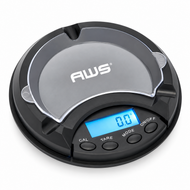
Selected pocket scales may suit small dry-coffee portions, sample preparation or portable demonstrations when the full load fits.
Check whether the platform supports your dosing cup securely. Evaluate controls, display visibility and the effect of automatic shutoff during your normal process.
Protect portable scales during transport and check their performance after relocation according to your procedure and the manufacturer’s instructions.
Bowl Scales for Contained Loads
Consider bowl scales when a contained-load format suits your preparation workflow.
Confirm the bowl’s usable volume, cleaning instructions and suitability for the intended food-contact use. Its weight still contributes to the total physical load.
Test pouring and unloading with the actual coffee quantities. A bowl that works for a small sample may be awkward for transferring a larger batch.
Bench Scales for Larger Loads
Evaluate bench scales for batch preparation, larger containers and other production tasks.
Check the exact capacity and platform dimensions. Large sacks or bins may require equipment beyond the range of a particular bench model.
Confirm that the container sits securely and that its weight transfers entirely through the platform. Contact with a wall, table or adjacent equipment can affect the reading.
Test Response and Automatic Shutoff
Static measurements and active dosing place different demands on a scale.
A model may produce a stable reading after loading but respond too slowly for your preferred pouring or filling technique. Test how it behaves as you approach the target.
Evaluate:
-
Delay between adding material and seeing the indication.
-
Overshoot during normal dosing.
-
Display stability after additions stop.
-
Automatic shutoff during pauses.
-
Ease of restarting or recovering a measurement.
-
Visibility in the intended lighting.
For brewing applications, test the full process rather than a brief tabletop demonstration.
Do not infer response speed, water resistance or timer functionality from the product category or appearance.
Evaluate Roast-Yield Measurements Consistently
Weighing green and roasted coffee can support production records when the method remains consistent.
A useful calculation is:
Mass loss percentage = (green coffee mass − roasted coffee mass) ÷ green coffee mass × 100
For example, a hypothetical batch starting at 1,000g and finishing at 850g has a measured mass loss of 15%.
Define when measurements are taken, which containers are used and how tare is handled. Follow equipment temperature limits and allow material and containers to reach conditions suitable for measurement.
Avoid placing hot vessels directly on a platform unless the manufacturer specifically permits that use.
Mass loss alone does not establish roast quality or explain every change in the coffee. Treat it as one production record alongside the other information your process collects.
Verify Performance Before a Bulk Purchase
Evaluate a representative sample at the intended workstation.
Use suitable reference weights near normal working loads, repeat measurements and check zero return after unloading. Compare results with criteria established for the task.
NIST’s calibration overview explains relating instrument response to reference standards. Follow the exact model’s instructions for any adjustment procedure.
Include the actual container during practical workflow trials. Check whether moving the load within the usable platform area produces unacceptable changes.
An example evaluation sheet could include:
| Evaluation item | What to record |
|---|---|
| Model and identification | Exact SKU and available serial number |
| Setup | Surface, container and operating conditions |
| Reference checks | Reference values and observed indications |
| Repeated loading | Variation between trials |
| Zero return | Indication after unloading |
| Workflow trial | Handling, visibility and response |
| Decision | Meets criteria, needs review or unsuitable |
A sample that powers on successfully has passed only a basic functional check.
Plan Reference Weights and Accessories
Review weighing scale accessories and confirm what is available and compatible with the selected models.
Check battery requirements, adapter specifications and the mass required by any calibration routine. Do not assume every model uses its maximum capacity as the adjustment weight.
If documented traceability is needed, specify the required evidence before purchasing weights or calibration services.
NIST’s metrological traceability guidance explains the documented calibration chain relating measurement results to a reference. A nominal marking on a weight does not establish that chain.
Separate Packaging Requirements From Recipe Measurements
A scale suitable for developing a brew recipe may not meet the requirements for selling coffee by weight or verifying packaged quantities.
Confirm the applicable requirements for the location and use, including the exact model’s approval status where required.
The NIST weighing and scales FAQs provide background on commercial weighing. Fine readability and a calibration function do not establish legal-for-trade suitability.
For packaged coffee, establish a net-content procedure that accounts for packaging tare and variation. Do not assume every empty bag weighs exactly the same.
NIST’s packaging and labeling resources provide background on package quantity and labeling practices. Determine the requirements and checking method that apply to your products.
Choosing a scale is one part of that process.
Establish Routine Checks and Cleaning
Assign responsibility for each operational scale.
Place equipment on a stable surface away from vibration, drafts and unnecessary heat. Keep coffee residue from accumulating around the platform, controls and housing.
Follow the manufacturer’s cleaning instructions. Do not assume a stainless-steel platform means the entire instrument can be washed down.
Set a checking schedule based on use, movement and the consequences of an incorrect measurement. Record reference checks and investigate changes before continuing sensitive work.
NIST’s guidance on controlling calibration results discusses monitoring short-term and long-term measurement variation.
Standardize the process across employees so changes in technique do not become confused with equipment problems.
Compare Wholesale Quotes by Total Cost
Request comparable quotations for the exact models and quantities.
Include:
-
Unit pricing.
-
Case quantities and minimum orders.
-
Freight and applicable delivery charges.
-
Included components.
-
Expected dispatch timing.
-
Wholesale defect and return procedures.
-
Warranty responsibilities.
-
Availability of replacement units.
For internal equipment, consider the cost of downtime and staff training as well as purchase price.
For resale inventory, calculate landed cost and contribution after selling fees, returns and support. A larger discount does not justify excess stock when demand is uncertain.
Keep operational equipment, backup units, demonstration products and saleable inventory as separate budget lines.
Frequently Asked Questions
What capacity should a coffee roaster choose?
Calculate the heaviest normal load, including the container and all equipment resting on the platform. Select suitable capacity with practical headroom.
Is 0.1g readability necessary for every coffee task?
No. Match readability and verified performance to the task’s tolerance. Brewing doses and larger production batches can require different equipment.
Can one scale handle brewing and production?
Possibly, if it meets both workflows’ requirements. Test capacity, platform fit, response and operating conditions before standardizing on one model.
Are all kitchen scales suitable for brewing?
Check the exact model. Timer functions, spill protection, response speed and automatic shutoff vary.
Does a calibration function make a scale legal for trade?
No. Verify the exact equipment and applicable requirements for the intended commercial use.
Prepare Your Wholesale Coffee Scale Order
Create a station-by-station list of working loads, tolerances and handling requirements. Evaluate samples, document acceptance criteria and confirm support before expanding the purchase.
Explore American Weigh Wholesale to compare available categories and request current product information, pricing and ordering terms. The site advertises volume pricing and reseller support; confirm the details for your proposed order.