
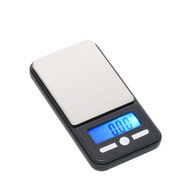
Wholesale Pocket Scales for Retailers: Complete Buying Guide
Published by AWS Team on 30th Sep 2026
Wholesale pocket scales can be a profitable, compact product category for retailers serving customers who weigh:
-
Jewelry
-
Coins
-
Gemstones
-
Coffee
-
Tea
-
Spices
-
Herbs
-
Collectibles
-
Small hardware
-
Craft materials
-
Model-making components
-
Laboratory samples
-
Fishing tackle
-
Archery components
However, retailers should not purchase pocket scales based on price or appearance alone.
The right wholesale assortment depends on:
-
Target customer
-
Capacity
-
Readability
-
Platform size
-
Weighing units
-
Calibration requirements
-
Included accessories
-
Power source
-
Display design
-
Protective cover
-
Packaging
-
Warranty
-
Wholesale order quantity
-
Retail compliance
-
Inventory turnover
A jewelry customer who weighs gemstones may want 0.01-gram readability. A hobbyist measuring larger components may prefer a 1,000-gram capacity with 0.1-gram readability. A customer working with milligram-level samples may need a specialized 0.001-gram scale rather than an ordinary pocket scale.
Retailers should build an assortment around distinct use cases instead of purchasing many nearly identical models.
The most effective wholesale buying process is:
define the customer → select capacity and readability → compare features → verify legal-use limitations → test samples → calculate landed cost → choose quantities → merchandise clearly → monitor sell-through
Quick Wholesale Pocket Scale Buying Guide
| Retail Customer | Practical Starting Specification | Key Features |
|---|---|---|
| Jewelry hobbyist | 100–500g × 0.01g | Carat mode, tray, cover |
| Coin collector | 100–500g × 0.01g | Gram and grain units |
| Coffee enthusiast | 500–1,000g × 0.1g | Tare, larger platform |
| Tea and spice buyer | 200–500g × 0.01g or 0.1g | Tray, easy cleaning |
| Gemstone buyer | 100–500g × 0.01g | Carat mode, stable platform |
| Craft customer | 500–1,000g × 0.1g | Higher capacity |
| Small-hardware user | 500–1,200g × 0.1g | Durable cover and platform |
| Precision hobbyist | 20–100g × 0.001g | Draft protection, calibration weight |
| General retailer | Mixed 0.01g and 0.1g assortment | Several price points |
| Gift retailer | 100–500g × 0.01g or 0.1g | Attractive design and packaging |
| Online marketplace seller | Proven high-volume SKUs | Accurate listings and identifiers |
| Specialty dealer | Application-specific assortment | Accessories and education |
Why Pocket Scales Work as a Retail Category
Pocket scales offer several advantages for retailers.
They are generally:
-
Compact
-
Easy to display
-
Easy to ship
-
Useful across multiple customer segments
-
Available at several price points
-
Suitable for online and physical retail
-
Easy to bundle with accessories
-
Small enough for impulse or add-on purchases
Retailers can review current wholesale options in the American Weigh Wholesale pocket scale collection.
Broad Customer Appeal
A pocket scale is not limited to one market.
Potential retail channels include:
-
Jewelry stores
-
Coin shops
-
Hobby stores
-
Coffee retailers
-
Tea shops
-
Craft stores
-
Hardware stores
-
Smoke shops
-
Gem and mineral stores
-
Educational suppliers
-
Sporting-goods stores
-
Online marketplaces
-
General-merchandise stores
The same model may appeal to several audiences when its capacity and readability match their needs.
Small Retail Footprint
Pocket scales occupy relatively little:
-
Shelf space
-
Counter space
-
Warehouse space
-
Shipping volume
This can make them easier to test than bulky weighing equipment.
Multiple Price Tiers
A retailer can build a good-better-best assortment using differences in:
-
Readability
-
Capacity
-
Construction
-
Display
-
Included accessories
-
Rechargeability
-
Protective cases
-
Platform size
-
Warranty
-
Specialty functions
This allows customers to select a model based on application and budget.
Capacity and Readability: The Most Important Specifications
Every pocket scale should be evaluated using two core numbers:
capacity × readability
For example:
500g × 0.1g
means:
-
Maximum weighing capacity: 500 grams
-
Display increment: 0.1 gram
A specification of:
200g × 0.01g
means:
-
Maximum capacity: 200 grams
-
Display increment: 0.01 gram
What Is Capacity?
Capacity is the maximum load the scale is designed to weigh.
Examples include:
-
100 grams
-
200 grams
-
220 grams
-
500 grams
-
600 grams
-
1,000 grams
-
1,200 grams
The container, tray or vessel used during weighing counts toward the scale’s capacity before tare is applied operationally. Retailers should encourage customers to select enough capacity for:
container + contents
What Is Readability?
Readability is the smallest increment displayed by the scale.
Common pocket-scale readabilities include:
-
0.1 gram
-
0.01 gram
-
0.001 gram on specialized milligram scales
Readability should not be described carelessly as guaranteed overall accuracy. Accuracy, repeatability, linearity, calibration, environment and technique all influence weighing performance.
Capacity and Readability Tradeoff
Pocket scales with higher capacity often have coarser readability.
Typical examples include:
-
100g × 0.01g
-
200g × 0.01g
-
500g × 0.1g
-
1,000g × 0.1g
Customers who need finer increments may accept a lower maximum capacity.
Customers who weigh larger items may prefer more capacity, even if the display increment is larger.
Avoid Selling One Specification to Everyone
A retailer should not assume that one model fits every use.
A 100g × 0.01g scale may be useful for:
-
Coins
-
Gemstones
-
Jewelry components
but inadequate for:
-
Large coffee portions
-
Heavier hardware
-
Containers plus ingredients
A 1,000g × 0.1g scale may work well for:
-
Coffee
-
Crafts
-
Hardware
but may not satisfy a customer seeking hundredth-gram readings.
Choosing 0.1g Pocket Scales
A 0.1-gram scale displays weight in tenths of a gram.
This is a practical general-purpose readability for:
-
Coffee beans
-
Tea
-
Spices
-
Small hardware
-
Craft materials
-
Model components
-
Collectibles
-
Fishing tackle
Advantages for Retailers
Models with 0.1g readability often offer:
-
Higher capacities
-
Broad customer appeal
-
Straightforward use
-
Accessible price points
-
Good potential as entry-level models
Example Wholesale Specifications
The AWS-600 pocket scale provides a 600g capacity with 0.1g readability, while other models may offer 500g, 1,000g or 1,200g capacities at the same display increment.
Retailers should compare:
-
Capacity
-
Platform size
-
Cover design
-
Included trays
-
Unit modes
-
Color options
-
Batteries
-
Calibration requirements
Choosing 0.01g Pocket Scales
A 0.01-gram pocket scale displays weight in hundredths of a gram.
This specification may appeal to customers weighing:
-
Jewelry
-
Coins
-
Gemstones
-
Precious-metal items
-
Small components
-
Tea
-
Spices
-
Collectibles
The CDV2-100 compact pocket scale provides a 100g capacity with 0.01g readability and supports gram, ounce, carat and grain units.
Why 0.01g Models Deserve a Separate Retail Tier
These scales can be positioned as a finer-readability option.
Retailers should clearly communicate:
-
Maximum capacity
-
Display increment
-
Platform dimensions
-
Calibration-weight requirement
-
Included accessories
-
Supported units
Avoid vague claims such as “ultra accurate” without presenting the actual specification.
Suitable Retail Messaging
Use:
-
“100g capacity”
-
“0.01g readability”
-
“Displays grams, ounces, carats and grains”
-
“Compact protective design”
Avoid unsupported language such as:
-
“Perfectly accurate”
-
“Laboratory certified”
-
“Legal for trade”
-
“Professional medical accuracy”
unless the product documentation supports the claim.
When Retailers Need 0.001g Scales
A scale displaying 0.001 gram is generally considered a milligram scale rather than a standard general-purpose pocket scale.
Customers may seek this readability for:
-
Laboratory-style samples
-
Reloading components
-
Fine jewelry materials
-
Precision hobbies
-
Small technical parts
-
Educational experiments
Retailers serving this audience should maintain a distinct milligram scale category rather than blending every precision level into one shelf section.
Why Merchandising Separation Matters
A 500g × 0.1g scale and a 50g × 0.001g scale serve different needs.
Displaying them without explanation can cause:
-
Customer confusion
-
Incorrect purchases
-
Returns
-
Poor reviews
-
Unsafe application assumptions
Use comparison signage or charts that explain:
-
Capacity
-
Readability
-
Intended applications
-
Calibration
-
Draft sensitivity
-
Platform size
Match Specifications to Customer Segments
Jewelry Retailers
Jewelry-focused customers may prioritize:
-
0.01g readability
-
Carat mode
-
Troy-ounce mode
-
Pennyweight mode
-
Stainless-steel platform
-
Protective cover
-
Calibration capability
A retailer serving jewelers should stock:
-
At least one compact 0.01g model
-
At least one higher-capacity option
-
Calibration weights where appropriate
-
A specialized 0.001g model for finer applications
Coin Shops
Coin customers may weigh:
-
Individual coins
-
Tokens
-
Medals
-
Small precious-metal items
Useful units may include:
-
Grams
-
Grains
-
Troy ounces
-
Pennyweight
The platform should be large enough for the intended coin or holder.
Coffee Retailers
Coffee customers may prioritize:
-
0.1g readability
-
500g or greater capacity
-
Tare function
-
Larger platform
-
Easy-to-clean surface
-
Readable display
A very small platform may be inconvenient for cups or brewing vessels.
Tea and Spice Retailers
Tea and spice buyers may value:
-
0.01g or 0.1g readability
-
Tare
-
Included tray
-
Compact storage
-
Easy cleaning
-
Clear display
The correct choice depends on whether the customer weighs tiny samples or larger portions.
Craft and Hobby Stores
Craft users may weigh:
-
Resin additives
-
Pigments
-
Beads
-
Model components
-
Small hardware
-
Fishing tackle
An assortment combining 0.01g and 0.1g models can serve both detailed and general projects.
Gem and Mineral Stores
Gemstone customers may prioritize:
-
Carat mode
-
0.01g readability
-
Stable platform
-
Protective cover
-
Calibration
-
Tray or container
Retailers should avoid presenting a general-purpose scale as a substitute for specialized professional equipment when the application requires certified performance.
Compare Platform Size
Capacity alone does not indicate whether an item will fit comfortably.
Review:
-
Platform width
-
Platform depth
-
Clearance around the display
-
Whether a container blocks the screen
-
Whether a tray is included
-
Whether the protective cover doubles as a tray
A scale can have enough capacity but an inconvenient platform.
Small Platforms
Small platforms work well for:
-
Coins
-
Rings
-
Gemstones
-
Tiny components
Larger Platforms
Larger platforms may be better for:
-
Cups
-
Bowls
-
Coffee portions
-
Stamp packets
-
Larger collectibles
-
Small parcels
Retailers should list platform dimensions wherever possible.
Evaluate the Tare Function
Tare resets the displayed weight to zero after a container is placed on the scale.
This allows the user to measure the contents without manually subtracting the container weight.
Tare is valuable for:
-
Coffee
-
Tea
-
Spices
-
Powders
-
Beads
-
Small components
-
Hardware
-
Craft materials
Retail Demonstration
A simple in-store demonstration can show:
-
Place an empty tray on the scale.
-
Press tare.
-
Confirm the display returns to zero.
-
Add the material.
-
Read the net weight.
This is more useful than describing tare only as a technical feature.
Evaluate Weighing Units
Common units include:
-
Grams
-
Ounces
-
Troy ounces
-
Pennyweight
-
Carats
-
Grains
Not every customer needs every unit.
Grams
Grams are widely useful for:
-
Food
-
Coffee
-
Tea
-
Crafts
-
Hardware
-
General weighing
Carats
Carat mode is relevant for gemstones and some jewelry applications.
Troy Ounces and Pennyweight
These units may appeal to customers working with precious metals.
Grains
Grain mode may be useful for:
-
Coins
-
Archery
-
Reloading
-
Certain technical hobbies
Retailers should list only the units supported by each specific model.
Calibration Requirements
Calibration helps align a scale’s readings with a known reference mass.
Before purchasing wholesale, check:
-
Required calibration-weight value
-
Whether the weight is included
-
Whether calibration is user-accessible
-
Calibration instructions
-
Whether additional weights should be stocked
Included vs. Separate Calibration Weights
Some models include a calibration weight.
Others require a separately purchased weight.
This distinction affects:
-
Retail value
-
Shelf messaging
-
Bundling strategy
-
Customer expectations
-
Return risk
Clearly disclose whether the calibration weight is included.
Calibration Is Not the Same as Certification
A scale that can be calibrated is not automatically:
-
Certified
-
NTEP approved
-
Legal for trade
-
Laboratory accredited
-
Suitable for regulated applications
Retailers should keep these concepts separate.
Legal-for-Trade Considerations
One of the most important retailer responsibilities is avoiding misleading claims about commercial use.
A customer may ask:
“Can I use this scale to calculate the price of goods sold by weight?”
That question is different from:
“Can I resell this scale in my store?”
A retailer can sell a pocket scale as a consumer product without that scale necessarily being approved for use in commercial transactions determined by weight.
What Is a Legal Metrology Device?
NIST defines a legal metrology device as a weighing or measuring device used to determine a quantity on which a charge for goods or services is based.
If a business sells products by weight, the scale used to determine the customer’s charge may be subject to state or local weights-and-measures requirements.
NTEP and Handbook 44
The NIST weighing and scales FAQ states that scales used for commercial applications must comply with the laws of the state where they are used and identifies an active NTEP Certificate of Conformance as important evidence of compliance with Handbook 44.
The current NIST Handbook 44 contains specifications, tolerances and technical requirements for weighing and measuring devices.
Retailer Best Practice
Unless a specific model is documented as compliant for the customer’s jurisdiction, do not market it as:
-
Legal for trade
-
Approved for retail pricing
-
Certified for commercial sales
-
NTEP certified
-
Suitable for regulated transactions
One current wholesale listing, the PC-201, expressly identifies its price-computing function as not legal for trade. That type of disclosure should remain visible in the retail listing.
Customers planning to use a scale commercially should verify requirements with their state or local weights-and-measures authority.
Power Options and Battery Strategy
Pocket scales may use:
-
AAA batteries
-
Coin-cell batteries
-
Rechargeable batteries
-
USB charging
-
AC adapters
-
Multiple power options
Replaceable Batteries
Advantages include:
-
Easy replacement
-
Familiar operation
-
No charging delay
Retailers should confirm:
-
Battery type
-
Whether batteries are included
-
Expected shelf considerations
-
Packaging requirements
Rechargeable Models
Rechargeable models may appeal to customers seeking:
-
Reduced disposable-battery use
-
USB convenience
-
Travel-friendly operation
Retailers should verify what charging cable is included.
AC-Compatible Models
An AC adapter can be useful for:
-
Workbenches
-
Retail counters
-
Repeated daily weighing
-
Educational settings
If the adapter is optional, disclose that clearly.
Protective Covers, Trays and Cases
Pocket scales are carried in:
-
Pockets
-
Bags
-
Toolboxes
-
Display kits
-
Mobile workstations
A protective cover can help shield:
-
Weighing platform
-
Display
-
Buttons
-
Housing
Many scale covers also function as expansion trays.
Retail Value of Included Accessories
Accessories can improve perceived value.
Common examples include:
-
Protective lid
-
Expansion tray
-
Weighing bowl
-
Calibration weight
-
Tweezers
-
Scoop
-
Carrying pouch
-
Hard case
-
AC adapter
-
USB cable
Retail product pages should identify exactly what is included.
Displays and Controls
The user experience depends heavily on the display and buttons.
Compare:
-
Backlight
-
Digit size
-
Contrast
-
Viewing angle
-
Display location
-
Unit indicator
-
Button layout
-
Auto-off
-
Overload indicator
-
Low-battery indicator
Backlit Displays
A backlight can help customers read results in:
-
Dim shops
-
Workshops
-
Markets
-
Storage areas
-
Mobile environments
Simple Controls
Common buttons include:
-
Power
-
Mode
-
Tare
-
Calibration
-
Counting or specialty functions
A simpler interface can reduce returns among general consumers.
Select an Assortment, Not Random Models
A strong retail assortment should give every model a reason to exist.
Entry-Level Model
Possible specification:
-
500–1,000g capacity
-
0.1g readability
-
Basic tare
-
Protective cover
-
Common weighing units
Finer-Readability Model
Possible specification:
-
100–500g capacity
-
0.01g readability
-
Multiple units
-
Stainless-steel platform
-
Tray or cover
Premium Pocket Model
Possible features:
-
Distinctive design
-
Larger display
-
Rechargeable power
-
Multiple trays
-
Carrying case
-
Additional accessories
Milligram Model
Possible specification:
-
20–100g capacity
-
0.001g readability
-
Calibration weight
-
Draft protection
-
Tray, scoop or tweezers
Higher-Capacity Compact Model
Possible specification:
-
1,000–1,200g capacity
-
0.1g readability
-
Larger platform
-
Protective lid
-
Tare
Wholesale Pricing and Volume Tiers
Wholesale buyers should calculate more than the product’s unit cost.
Current volume-discount information on the American Weigh Wholesale homepage shows tiered discounts based on order quantity. Because promotions and terms can change, retailers should verify the current thresholds before placing an order.
Calculate Landed Cost
Landed cost may include:
-
Product cost
-
Freight
-
Insurance
-
Payment fees
-
Receiving labor
-
Warehousing
-
Labeling
-
Marketplace preparation
-
Packaging
-
Duties or taxes when applicable
-
Damage allowance
Use:
landed cost per unit = total product and acquisition cost ÷ sellable units received
Account for Unsellable Units
If 100 units arrive and two cannot be sold, divide the total cost by 98 sellable units—not 100.
Do Not Choose Quantity From Discount Alone
A higher discount does not guarantee a better purchase.
Consider:
-
Sell-through
-
Storage
-
Cash flow
-
Product life cycle
-
Number of competing SKUs
-
Seasonal demand
-
Reorder lead time
-
Marketplace fees
How Many Pocket Scales Should a Retailer Buy?
The correct opening order depends on:
-
Customer demand
-
Number of locations
-
Online traffic
-
Shelf capacity
-
Available cash
-
Supplier minimums
-
Lead times
-
Number of models
Small Test Order
A smaller opening order is appropriate when:
-
Introducing the category
-
Testing a new capacity
-
Testing an unfamiliar design
-
Launching on a marketplace
-
Selling in one location
-
Demand is uncertain
Larger Order
A larger order may make sense when:
-
The model already sells consistently
-
Multiple locations need stock
-
Promotional demand is forecast
-
Reorder history is established
-
A volume tier produces meaningful savings
-
Warehouse space is available
Avoid Over-SKUing
Twenty similar 500g × 0.1g models can divide demand and create slow inventory.
It is often better to begin with:
-
One or two entry-level models
-
Two 0.01g models
-
One premium model
-
One higher-capacity model
-
One specialized milligram model
Then expand based on actual sales.
Inventory Planning
Calculate Sell-Through
Use:
units sold ÷ units available for sale × 100
Example:
-
100 units received
-
60 sold during the review period
Sell-through:
60 ÷ 100 × 100 = 60%
Calculate Weeks of Supply
Use:
units on hand ÷ average weekly unit sales
Example:
-
120 units on hand
-
20 units sold per week
Weeks of supply:
120 ÷ 20 = 6 weeks
Establish a Reorder Point
Use:
average weekly sales × supplier lead time + safety stock
Example:
-
Weekly sales: 25 units
-
Lead time: two weeks
-
Safety stock: 30 units
Reorder point:
25 × 2 + 30 = 80 units
Retail Packaging and Product Information
Accurate product data reduces confusion and returns.
Every listing should clearly show:
-
Brand
-
Model
-
SKU
-
Capacity
-
Readability
-
Units
-
Platform dimensions
-
Scale dimensions
-
Power requirements
-
Included batteries
-
Calibration requirement
-
Included accessories
-
Warranty
-
Legal-for-trade status or limitation
-
Intended applications
Lead With Capacity and Readability
Use a title such as:
Digital Pocket Scale — 220g × 0.01g
This immediately communicates the two most important specifications.
Avoid Copying One Description Across Every Model
Even visually similar models may differ in:
-
Capacity
-
Readability
-
Units
-
Calibration weight
-
Platform size
-
Batteries
-
Accessories
Each listing should be model-specific.
Barcodes and Retail Identification
Retailers need reliable product identification for:
-
Receiving
-
Inventory counts
-
Point of sale
-
Reordering
-
Marketplace listings
-
Returns
-
Multi-location transfers
GS1 US barcoding guidance explains how barcodes support product identification, pricing, inventory management and replenishment.
Do Not Reuse Product Identifiers Incorrectly
Different product variants may require separate identifiers when they differ by:
-
Model
-
Color
-
Capacity
-
Readability
-
Pack size
Maintain accurate product master data.
Warranty and Returns
Warranty details can influence customer confidence.
Before buying, confirm:
-
Warranty length
-
Warranty provider
-
Covered defects
-
Required documentation
-
Customer service process
-
Retailer responsibilities
Several American Weigh Scale listings identify a manufacturer warranty, but retailers should verify the specific model’s current warranty details.
The Federal Trade Commission’s business guide to federal warranty law explains seller obligations and pre-sale warranty considerations for consumer products.
Build a Clear Return Policy
Decide how to handle:
-
Dead-on-arrival products
-
Missing accessories
-
Cosmetic damage
-
Calibration questions
-
Customer misuse
-
Used returns
-
Battery issues
-
Incorrect application purchases
Train staff to distinguish a defective scale from:
-
Unstable surface
-
Draft interference
-
Low battery
-
Overloading
-
Incorrect calibration
-
Wrong unit mode
-
Container contact
Sample Testing Before a Large Order
Retailers should test representative samples before committing to a large wholesale purchase.
Inspect Packaging
Check:
-
Retail appearance
-
Barcode placement
-
Capacity and readability visibility
-
Accessory list
-
Instructions
-
Warranty information
-
Carton durability
Test Basic Operation
Verify:
-
Power
-
Display
-
Tare
-
Unit selection
-
Repeat readings
-
Calibration process
-
Buttons
-
Cover fit
-
Auto-off
-
Battery compartment
Test the Customer Experience
Ask:
-
Is setup intuitive?
-
Can the display be read easily?
-
Does the tray fit?
-
Is the platform large enough?
-
Are instructions clear?
-
Is the calibration weight included?
-
Does the product match its listing?
Retain a Reference Sample
Keep one approved sample for:
-
Employee training
-
Listing verification
-
Customer-service comparison
-
Photography
-
Quality-control checks
Merchandising Pocket Scales
Organize by Readability
A clear retail display might use:
-
0.1g general-purpose scales
-
0.01g precision pocket scales
-
0.001g milligram scales
This helps customers understand the product ladder.
Add Application Signage
Use factual, qualified language:
-
For coins and collectibles
-
For coffee, tea and spices
-
For jewelry components
-
For crafts and small hardware
-
For precision hobby use
Avoid implying regulatory suitability.
Use Comparison Cards
| Model | Capacity | Readability | Units | Key Accessory |
|---|---|---|---|---|
| Entry | 500g | 0.1g | g, oz | Protective cover |
| Precision | 220g | 0.01g | Multiple | Expansion tray |
| High capacity | 1,000g | 0.1g | Multiple | Larger platform |
| Milligram | 50g | 0.001g | Multiple | Calibration weight |
Bundle Accessories
Potential bundles include:
-
Scale plus calibration weight
-
Scale plus weighing trays
-
Scale plus coin capsules
-
Scale plus gemstone containers
-
Scale plus coffee accessories
-
Scale plus protective case
Make sure every bundle component suits the scale specification.
Online Marketplace Strategy
Use Accurate Titles
Include:
-
Brand
-
Model
-
Capacity
-
Readability
-
Main product type
Build Model-Specific Bullets
Cover:
-
Capacity
-
Readability
-
Tare
-
Units
-
Platform
-
Power
-
Accessories
-
Warranty
-
Intended use
Show the Scale Clearly
Useful product images include:
-
Front view
-
Platform view
-
Display close-up
-
Scale with cover
-
Accessories
-
Capacity/readability graphic
-
Dimensions
-
Packaging
Avoid Unsupported Advertising Claims
The FTC’s advertising guidance for small businesses explains that advertising claims should be truthful and supported, including statements about warranties.
Avoid claims such as:
-
Guaranteed perfectly accurate
-
Certified for all commercial use
-
Medical grade
-
Laboratory approved
-
Waterproof
-
Legal for trade
unless documented.
Common Wholesale Pocket Scale Buying Mistakes
Buying by Price Alone
Evaluate specifications, accessories, warranty and customer fit.
Confusing Readability With Capacity
A higher capacity does not mean finer readings.
Calling Readability “Accuracy”
Display increment and overall measurement performance are not identical concepts.
Stocking Too Many Similar Models
Build a purposeful assortment.
Ignoring Platform Size
The item or container must fit comfortably.
Failing to Disclose Calibration-Weight Requirements
State whether the weight is included.
Assuming Every Scale Is Legal for Trade
Verify the specific model and jurisdiction.
Ignoring Product Identifiers
Maintain accurate UPC, SKU and variant data.
Ordering the Highest Volume Tier Immediately
Test sell-through before tying up cash.
Hiding Warranty Details
Make warranty information available before sale.
Using Generic Listings
Every model needs accurate capacity, readability and accessory information.
Ignoring Batteries
Disclose battery type and inclusion.
Failing to Train Employees
Staff should understand tare, units, calibration and legal-use limitations.
Wholesale Pocket Scale Buyer Checklist
Before placing an order, confirm:
-
Who is the target customer?
-
What will the customer weigh?
-
What capacity is required?
-
What readability is required?
-
Is 0.1g sufficient?
-
Is 0.01g required?
-
Is a separate 0.001g category needed?
-
Is the platform large enough?
-
Is tare included?
-
What units are supported?
-
Is carat mode needed?
-
Is grain mode needed?
-
What calibration weight is required?
-
Is the calibration weight included?
-
Are batteries included?
-
Is the model rechargeable?
-
Is an AC adapter included or optional?
-
Does the cover double as a tray?
-
What other accessories are included?
-
What is the warranty?
-
Is the product clearly identified as legal or not legal for trade?
-
Are local commercial-use requirements relevant?
-
Does the retail packaging display capacity and readability?
-
Is the barcode correct?
-
Are color variants tracked separately?
-
Has a sample been tested?
-
What is the landed cost?
-
What is the planned retail price?
-
What is the target gross margin?
-
What are marketplace fees?
-
What is the opening order?
-
What volume discount applies?
-
What is the expected weekly sales rate?
-
How many weeks of supply will be purchased?
-
What is the reorder point?
-
Is warehouse space available?
-
Are return procedures documented?
-
Are product claims supportable?
-
Are staff trained?
-
Does every model have a distinct role?
Frequently Asked Questions
What are the best wholesale pocket scales for retailers?
The best assortment usually includes:
-
General-purpose 0.1g models
-
Finer 0.01g models
-
At least one higher-capacity model
-
One premium or feature-rich model
-
A separate 0.001g milligram option when customers require it
What capacity should retailers stock?
A balanced assortment may include:
-
100–220g for finer weighing
-
500–600g for general use
-
1,000–1,200g for higher-capacity compact weighing
Choose based on customer demand.
Is 0.01g better than 0.1g?
Not universally.
A 0.01g model provides finer displayed increments, but it may offer less capacity or cost more.
A 0.1g model may be more practical for coffee, crafts and larger items.
Should retailers stock milligram scales?
Yes, if customers need 0.001g readability.
Merchandise them separately from standard pocket scales to reduce confusion.
What features matter most?
Prioritize:
-
Capacity
-
Readability
-
Tare
-
Platform size
-
Units
-
Calibration
-
Display
-
Protective cover
-
Power
-
Included accessories
-
Warranty
Are pocket scales legal for trade?
Not automatically.
If the scale will determine a charge in a commercial transaction, the customer should verify that the specific model complies with the applicable state and local requirements.
Can a price-computing pocket scale be used for retail sales by weight?
A price-computing function does not automatically make a scale legal for trade.
For example, the PC-201 price-computing pocket scale is currently identified as not legal for trade.
How many models should a new retailer begin with?
A focused opening assortment of approximately five to seven models can cover several capacities and price points without creating too much duplication.
Should retailers buy the highest discount tier?
Only when demand, cash flow, storage and sell-through support the quantity.
A smaller test order can provide better information before a larger commitment.
What should a pocket-scale listing include?
Include:
-
Capacity
-
Readability
-
Units
-
Platform dimensions
-
Power
-
Calibration requirements
-
Accessories
-
Warranty
-
Legal-use limitations
Should calibration weights be sold separately?
Yes, when models require weights that are not included.
Clearly match the correct weight to each scale.
How can retailers reduce pocket-scale returns?
Use accurate product listings, explain capacity versus readability, disclose included accessories and train customers on stable surfaces, tare, calibration and overload prevention.
Final Recommendation
Retailers buying wholesale pocket scales should build a deliberate assortment rather than choosing several models that look similar.
Begin with:
-
An entry-level 0.1g model
-
A finer 0.01g model
-
A higher-capacity compact model
-
A premium feature-driven model
-
A specialized 0.001g milligram model when appropriate
Evaluate every product using:
capacity + readability + platform + functions + accessories + warranty + legal-use status + wholesale economics
Retailers can begin by comparing the complete product selection on American Weigh Wholesale and then choose models according to their own customers, channels and expected sales volume.
The strongest buying process is:
segment customers → compare specifications → test samples → calculate landed cost → verify claims → place a controlled opening order → track sell-through → expand proven models
That approach helps retailers create a useful pocket-scale category while protecting margin, reducing returns and giving customers clearer choices.